Comparisons · 7 min
SPC or LVT Vinyl: What's the Difference?
2026 m. rugpjūčio 12 d.
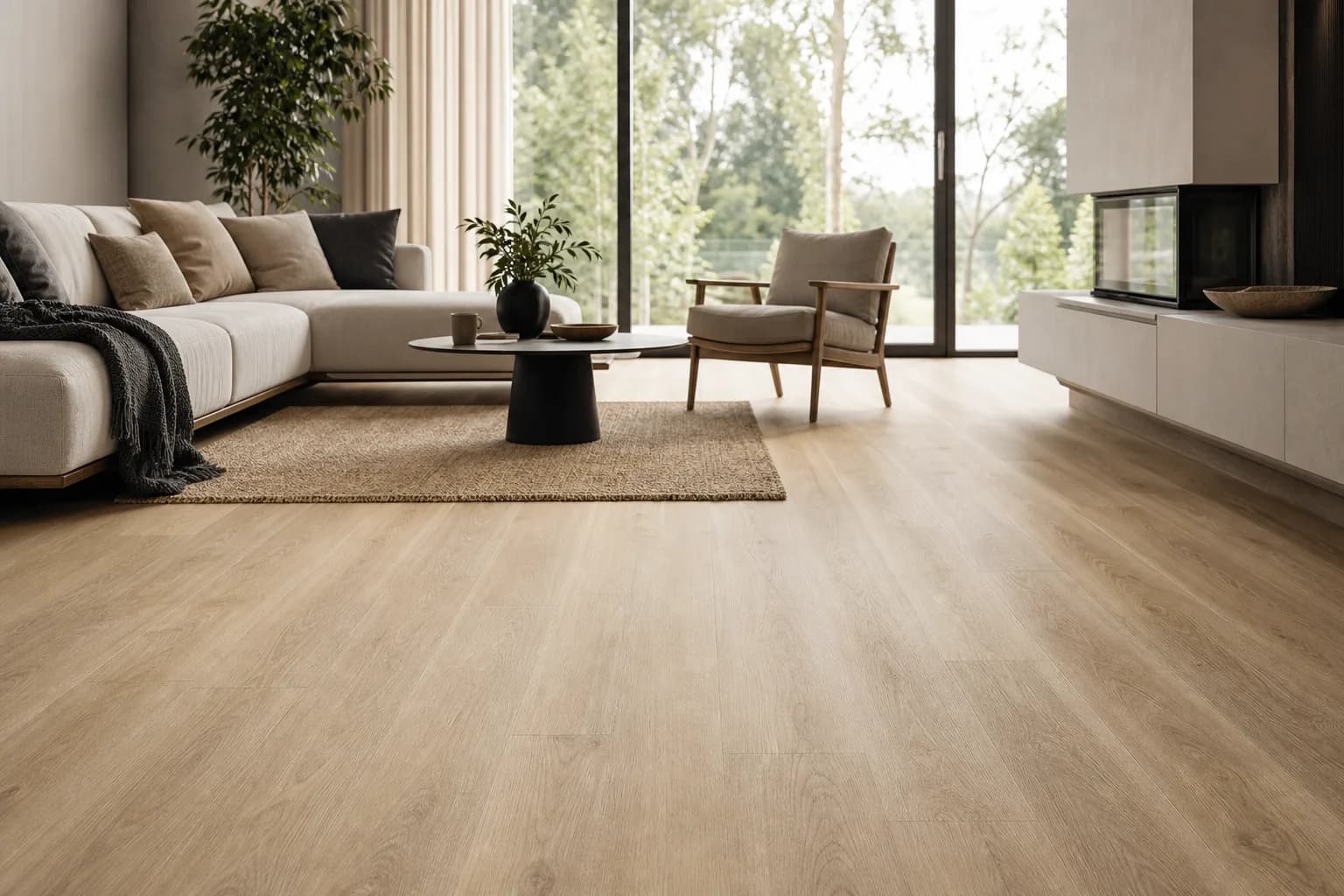
“Vinyl” is a broad category that covers some very different products. SPC and LVT are the two most often confused — yet technically they differ fundamentally: in construction, hardness, price and suitability. This guide explains what each one is, when to choose which, and what to look for so you neither overpay nor end up with the wrong floor.
The abbreviations — what is what?
LVT — Luxury Vinyl Tile
LVT is the umbrella term for flexible vinyl planks and tiles. A typical structure:
- Wear layer (0,3–0,7 mm) — transparent and scratch-resistant; its thickness determines how long the floor lasts.
- Decorative layer — a printed wood, stone or concrete pattern.
- Flexible PVC base — 2–5 mm.
LVT can be glued to the subfloor (dry-back) or laid as loose-lay / locking planks (click-LVT). The flexible base feels warmer and quieter underfoot, but it also telegraphs more of the subfloor’s imperfections.
SPC — Stone Polymer Composite
SPC is the newer, rigid vinyl category built around a mineral core. A typical structure:
- Wear layer (0,3–0,55 mm).
- Decorative layer.
- SPC core — limestone powder + PVC + stabilisers, 3,5–6 mm, very hard and stable.
- Often with an integrated acoustic underlay (IXPE, EVA).
SPC is almost always installed with a click system and is not glued to the subfloor — so even a non-professional can lay it. Our entire vinyl collection is SPC — for example SPC Rio.
SPC vs LVT: comparison table
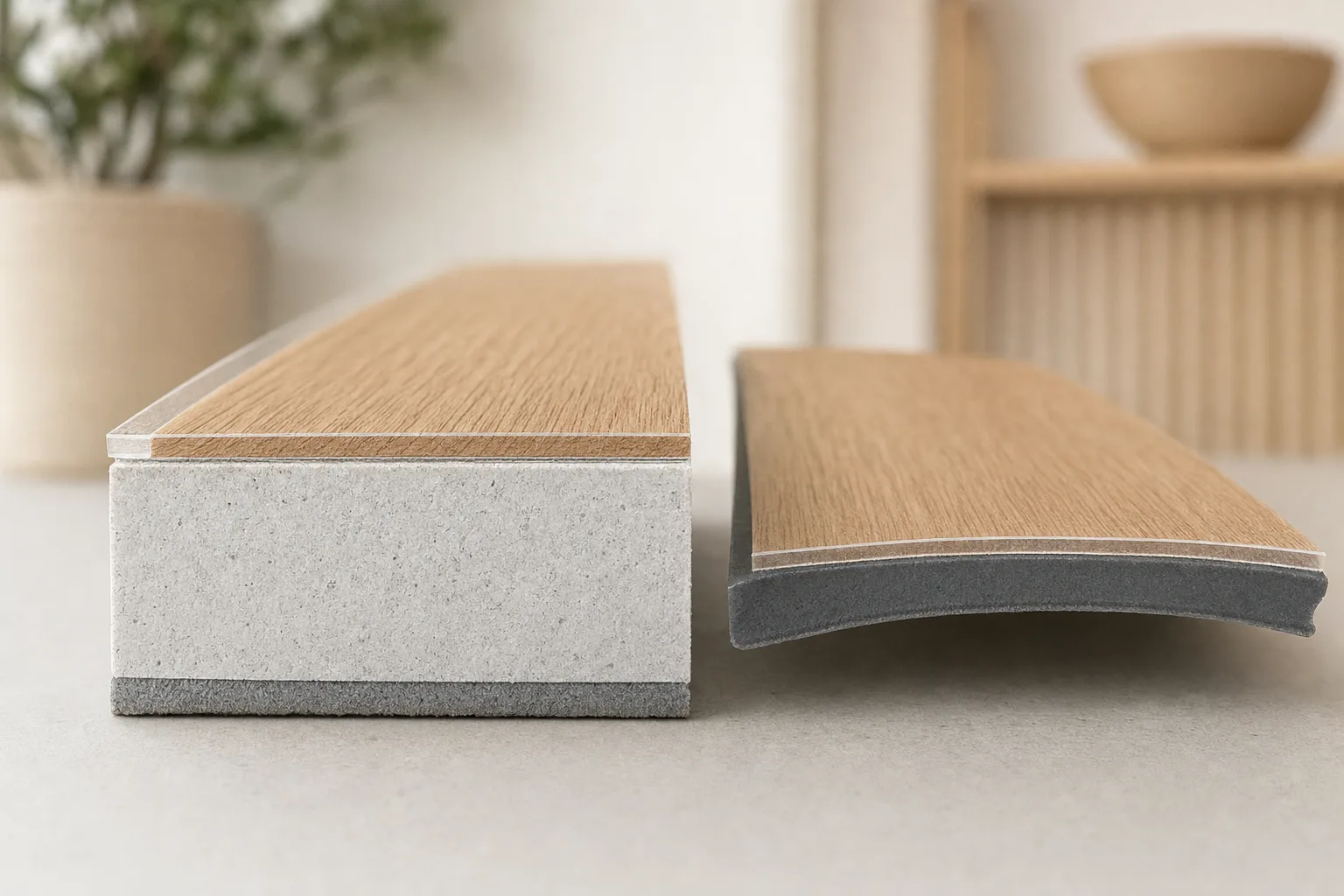
| Property | SPC (rigid) | LVT (flexible) |
|---|---|---|
| Construction / core | Rigid stone (limestone) and PVC core, 3,5–6 mm | Flexible PVC base, 2–5 mm |
| Hardness | Rigid, dent-resistant | Flexible, softer |
| Water resistance | 100 % waterproof | 100 % waterproof (with glue-down, sealed joints matter) |
| Suitability for underfloor heating | Very good — stable up to a ~28 °C surface temperature | Suitable with limits — expands more |
| Sound / comfort underfoot | Firmer; quiet with an IXPE underlay | Warmer and quieter underfoot |
| Installation method | Click (floating, glue-free) | Glue-down or loose-lay / click |
| Resistance to temperature / denting | High — handles swings, flexes less | Moderate — expands and contracts more |
| Price (€/m²) | ~25–55 €/m² (indicative) | ~18–45 €/m² (indicative) |
| Best suited to | Underfloor heating, holiday homes, bathrooms/kitchens, uneven subfloors, DIY installation | Rooms where softness/quietness matter most; glue-down installation over very uneven concrete |
The table shows typical market ranges; for specific products, see the vinyl collection.
Indicative market prices (€/m²)
The figures below are indicative market prices — general market ranges that help you gauge the relationship between SPC and LVT. They are not Terris prices. You will always find our current prices in the vinyl collection, and a detailed explanation of what drives pricing in our article on vinyl flooring prices.
| Segment | SPC (indicative) | LVT (indicative) |
|---|---|---|
| Entry-level (0,3 mm wear layer) | ~25–35 €/m² | ~18–28 €/m² |
| Standard residential (0,5 mm) | ~35–45 €/m² | ~28–38 €/m² |
| Commercial (0,7 mm+) | ~45–55 €/m² | ~38–45 €/m² |
The rule is simple: price is driven mainly by wear layer thickness, not just the type. Flexible LVT is often a little cheaper within the same segment, but SPC repays the difference in stability and in simple installation you can do yourself.
Water resistance
Both SPC and LVT are 100 % waterproof — water cannot soak into a PVC base. The difference lies in the joints and in stability. SPC click joints are strong and barely move, so the floor holds up well in bathrooms, kitchens or basements. With glue-down LVT, a high-quality sealed joint is essential; if the adhesive is applied carelessly, moisture can creep beneath the floor and lift it over time. In practice both types are reliable around water, but SPC forgives more installation mistakes.
Underfloor heating
Both types work with underfloor heating, but not equally well. Thanks to its rigid mineral core, SPC is more thermally stable — it expands and contracts less, so it copes better with heating cycles and with direct sun by large windows. As the more flexible product, LVT is more sensitive to temperature changes; it can be used, but you must respect the manufacturer’s stated maximum surface temperature (typically up to ~27–28 °C) and avoid rapid heat-up. We cover this in more depth in our guide to vinyl flooring for underfloor heating.
Comfort and acoustics
Here LVT has the edge. The flexible base feels warmer and quieter underfoot, which is why LVT is a popular choice for bedrooms and children’s rooms. SPC is firmer, but an integrated IXPE acoustic underlay all but closes the gap, dampening sound and adding a sense of warmth. If acoustics really matter, choose SPC with a good integrated underlay or add a suitable acoustic base.
The wear layer — the number that matters most
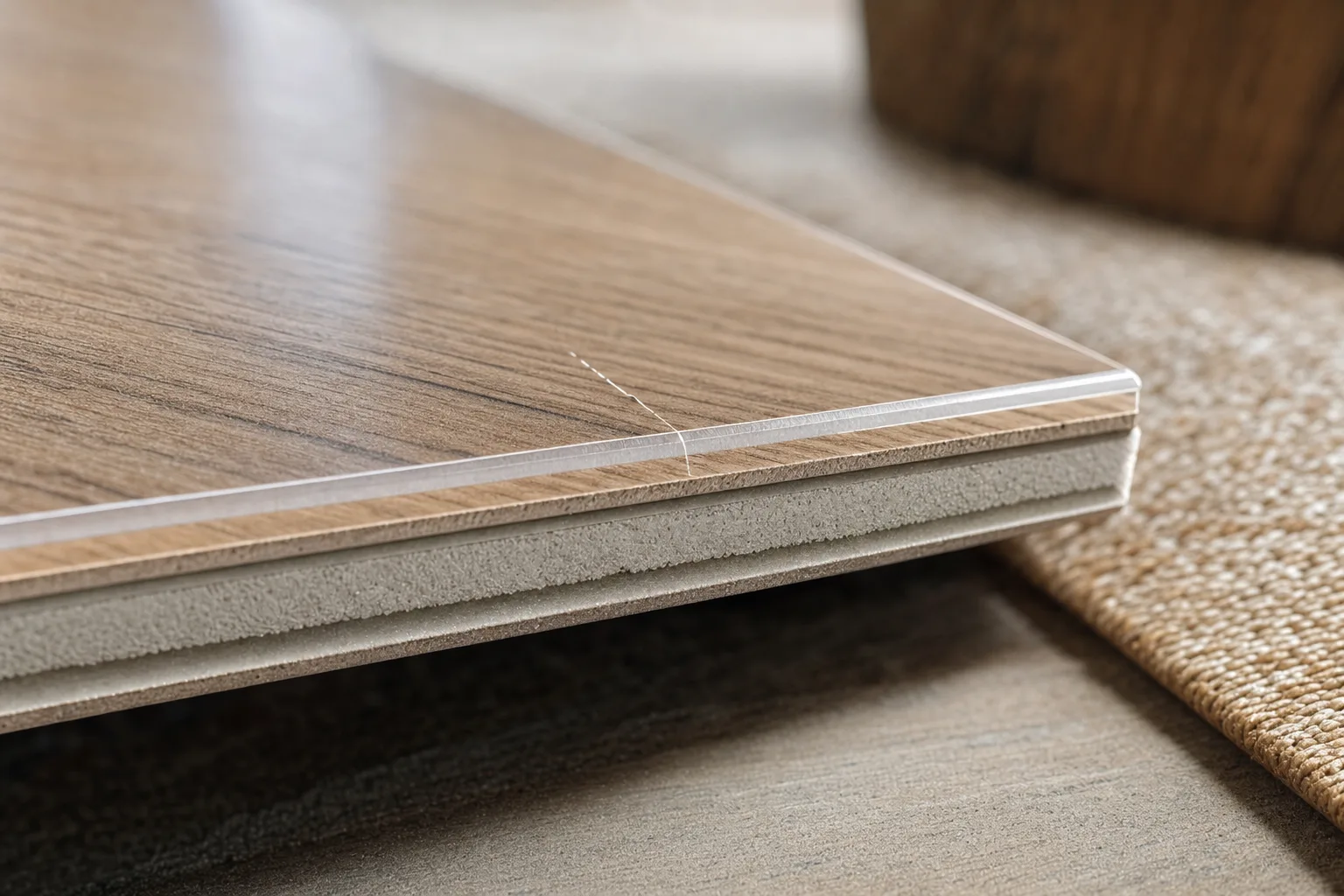
Don’t rely on words like “tough” or “durable” alone. The objective measure is wear layer thickness (mm), equally important for SPC and LVT:
- 0,3 mm — fine for calmer living areas.
- 0,5 mm — standard residential use (use class 33).
- 0,7 mm — light commercial (use class 42): offices, smaller shops.
- 1,0 mm+ — heavy commercial: clinics, airports.
When to choose SPC?
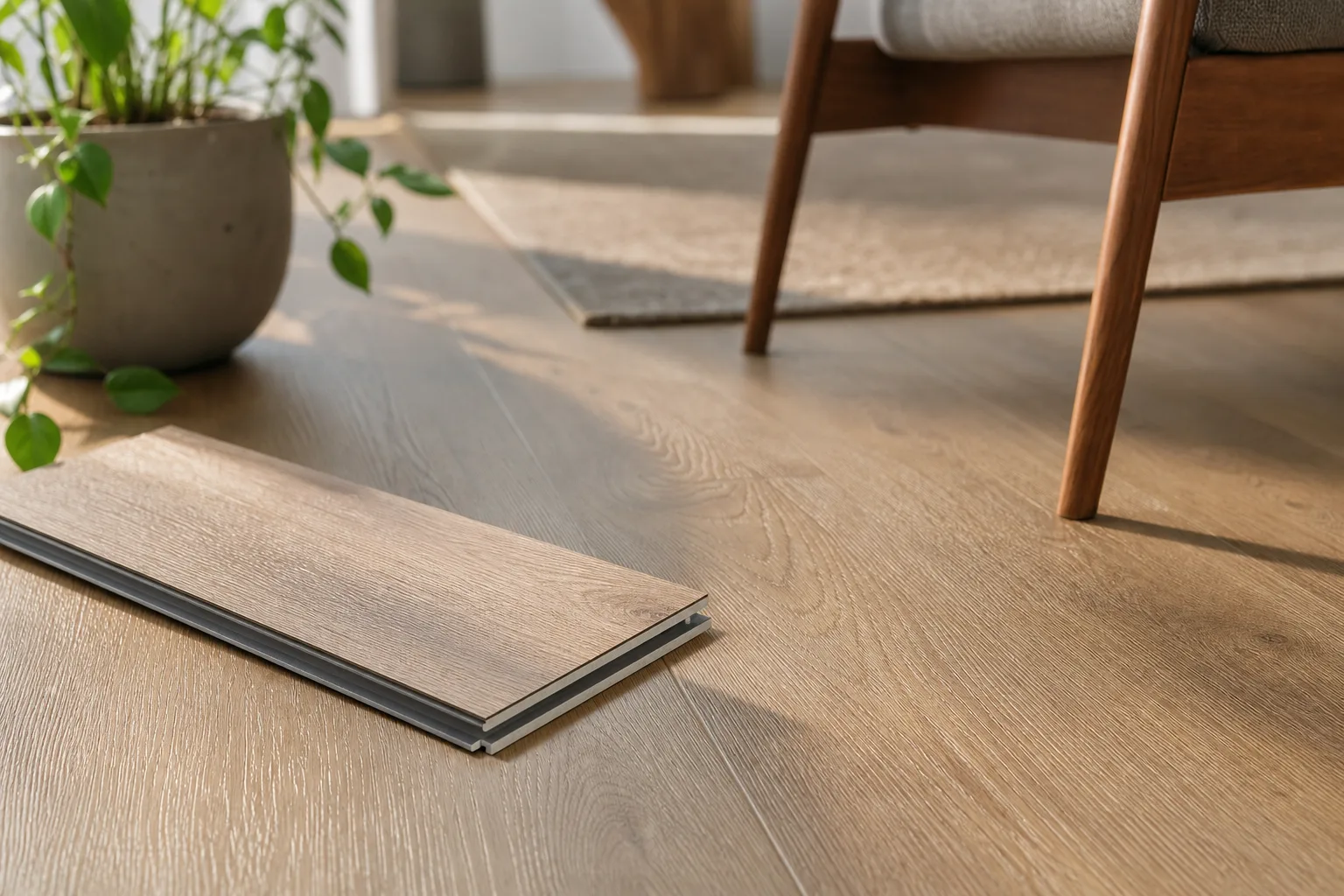
- Over underfloor heating — the rigid core stays stable through temperature changes.
- In holiday homes and unheated spaces — it withstands wider temperature swings without deforming.
- In damp rooms — the bathroom, the kitchen, the basement.
- Over an imperfect subfloor — the rigid SPC core “hides” small irregularities that would show through flexible LVT.
- When you want to lay it yourself — the glue-free click system.
When can LVT be the better choice?
- When softness and quietness come first — in bedrooms and children’s rooms.
- Over very uneven concrete — glue-down LVT can follow the subfloor more closely.
- In specific design situations that call for a thin glue-down covering.
What they share — and where both lose
Any vinyl has its limits:
- It cannot be sanded — once the wear layer is gone, the whole floor is replaced.
- A lifespan of 15–25 years (for comparison, engineered wood lasts 30–50).
- In direct sunlight UV rays can fade the pattern — curtains are a sensible precaution.
- Hard impacts can leave dents — especially in softer LVT.
The environmental angle
Vinyl is a PVC product, and there is no hiding it. That said, SPC contains a high share of natural limestone (less “pure plastic”), and quality products carry FloorScore / CE certificates with minimal VOC emissions. PVC recycling capacity across Europe is still limited — a genuine long-term challenge.
How to choose by room
The theory is clear, but in practice the room itself usually decides. A quick orientation:
- Kitchen and bathroom — moisture, splashes, temperature swings. The natural choice here is SPC: stable, waterproof and strong at the joints. LVT works if it is glued professionally and sealed properly.
- Living room and hallway — heavy traffic and the weight of furniture. SPC’s rigid core resists dents better; choose at least a 0,5 mm wear layer.
- Bedroom and children’s room — comfort underfoot matters most. LVT or SPC with a good IXPE underlay — both work; it comes down to how sensitive you are to sound and warmth.
- Holiday home, terrace zone, conservatory — big temperature differences and direct sun. Unambiguously SPC: flexible LVT expands more in such conditions and can deform.
- Basement or a room over underfloor heating — moisture plus heating cycles. SPC click is the best fit.
Common mistakes when choosing
A few mistakes come up again and again — easy to avoid if you know about them in advance:
- Looking only at total thickness. A 5 mm floor with a 0,3 mm wear layer is worse than a 4 mm floor with a 0,5 mm layer. The wear layer decides, not the overall thickness.
- Forgetting subfloor preparation. Even SPC will not hide large dips or humps — the subfloor must be levelled to the manufacturer’s requirements.
- Comparing on price alone. The cheapest option usually has the thinnest wear layer and wears out sooner. Weigh up the value over the floor’s whole service life, not just the €/m² label.
- Ignoring direct sunlight. Next to large windows or in a conservatory, choose the more stable SPC and use curtains to protect the pattern.
- Confusing type with installation method. “Click” and “glue-down” describe how a floor is fitted; SPC and LVT describe how it is built. See the click and glue-down categories.
Conclusion
SPC and LVT are both “vinyl”, yet technically they differ fundamentally. For most modern homes — especially over underfloor heating, in damp rooms or on an uneven subfloor — SPC is the smarter choice. LVT is worth considering when softness and quietness come first or when you need a glue-down solution. Want the fuller picture? Read our complete guide to vinyl flooring. Still undecided? Order up to three free samples and see the difference for yourself, or get in touch for a free consultation — we will help you find the right floor for your rooms.
FAQ
Which is more waterproof — SPC or LVT?
Both are 100 % waterproof, because the PVC base cannot absorb water. The practical difference is in the joints: SPC click joints are strong and stable, so the floor forgives more installation mistakes. With glue-down LVT the joints must be sealed properly, otherwise moisture can creep beneath the floor.
Are SPC and LVT suitable for underfloor heating?
Yes, both work with underfloor heating. SPC, with its rigid mineral core, is more stable and copes better with temperature swings, so it is the better fit. LVT can also be used, but you must respect the maximum surface temperature (typically up to ~27–28 °C) and avoid rapid heat-up.
Is SPC vinyl worth the money?
For most homes — yes. For a modest premium you get stability through temperature changes, dent resistance, compatibility with underfloor heating and simple glue-free click installation. Value depends on the wear layer thickness — 0,5 mm suits standard residential use.
Which is cheaper — SPC or LVT?
Within the same segment, flexible LVT is often slightly cheaper than SPC. The biggest influence on price, however, is wear layer thickness rather than type alone. Indicative market prices: SPC ~25–55 €/m², LVT ~18–45 €/m². See the vinyl collection for current prices.
What is the fundamental difference between SPC and LVT?
Construction. SPC has a rigid stone (limestone) and PVC core — stable, dent-resistant and installed with a click system. LVT has a flexible PVC base — warmer and quieter underfoot, more often glued down. SPC handles temperature swings and uneven subfloors better; LVT wins where comfort matters most.
Related articles
- Vinyl flooring: the complete 2026 guide
- Vinyl wear layer: how to choose by use class
- Vinyl flooring for underfloor heating
- Vinyl flooring prices: how much SPC vinyl costs
- Parquet or vinyl: the full 2026 comparison