Tips
Vinyl Flooring: The Complete Guide 2026
2026 m. rugpjūčio 12 d.
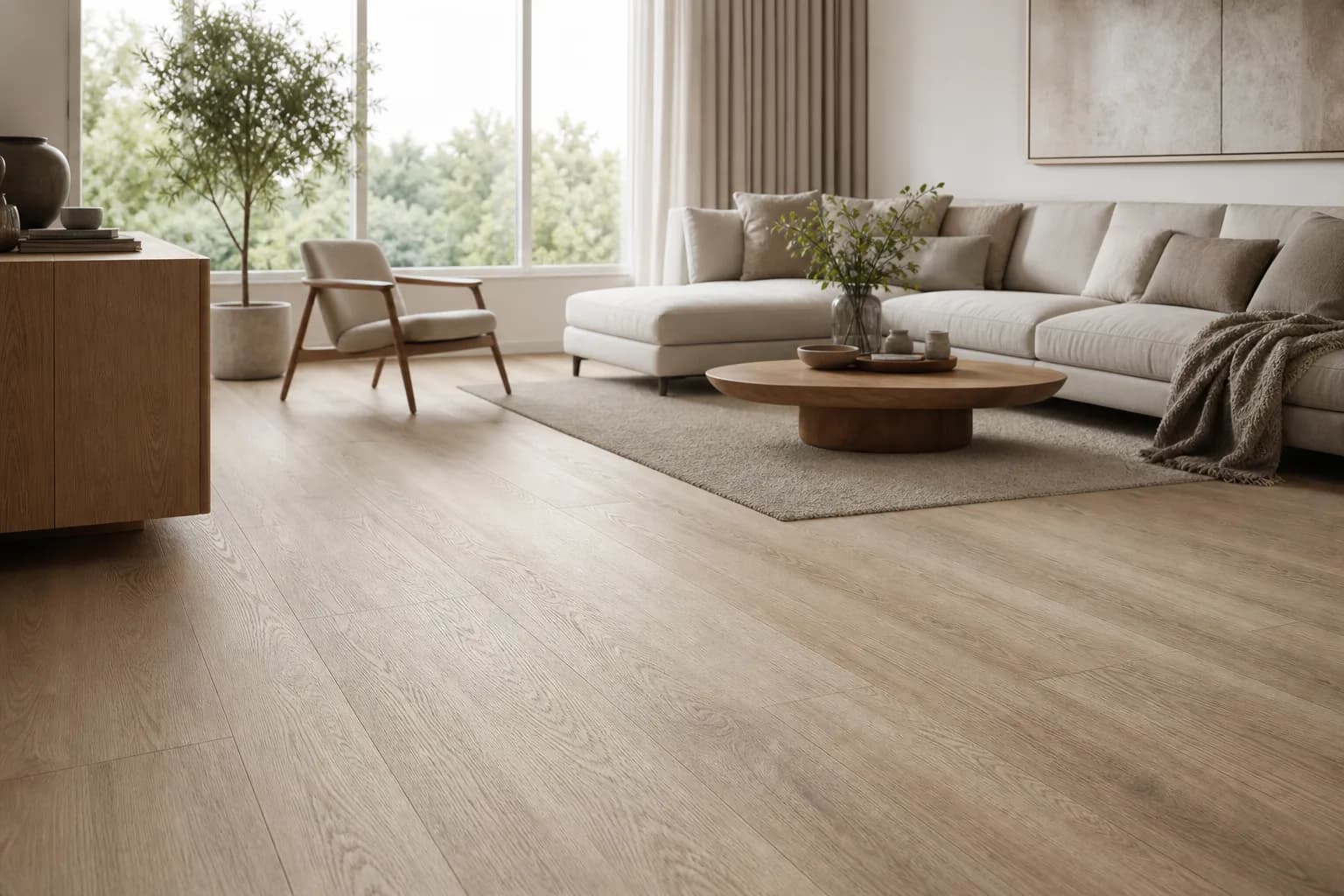
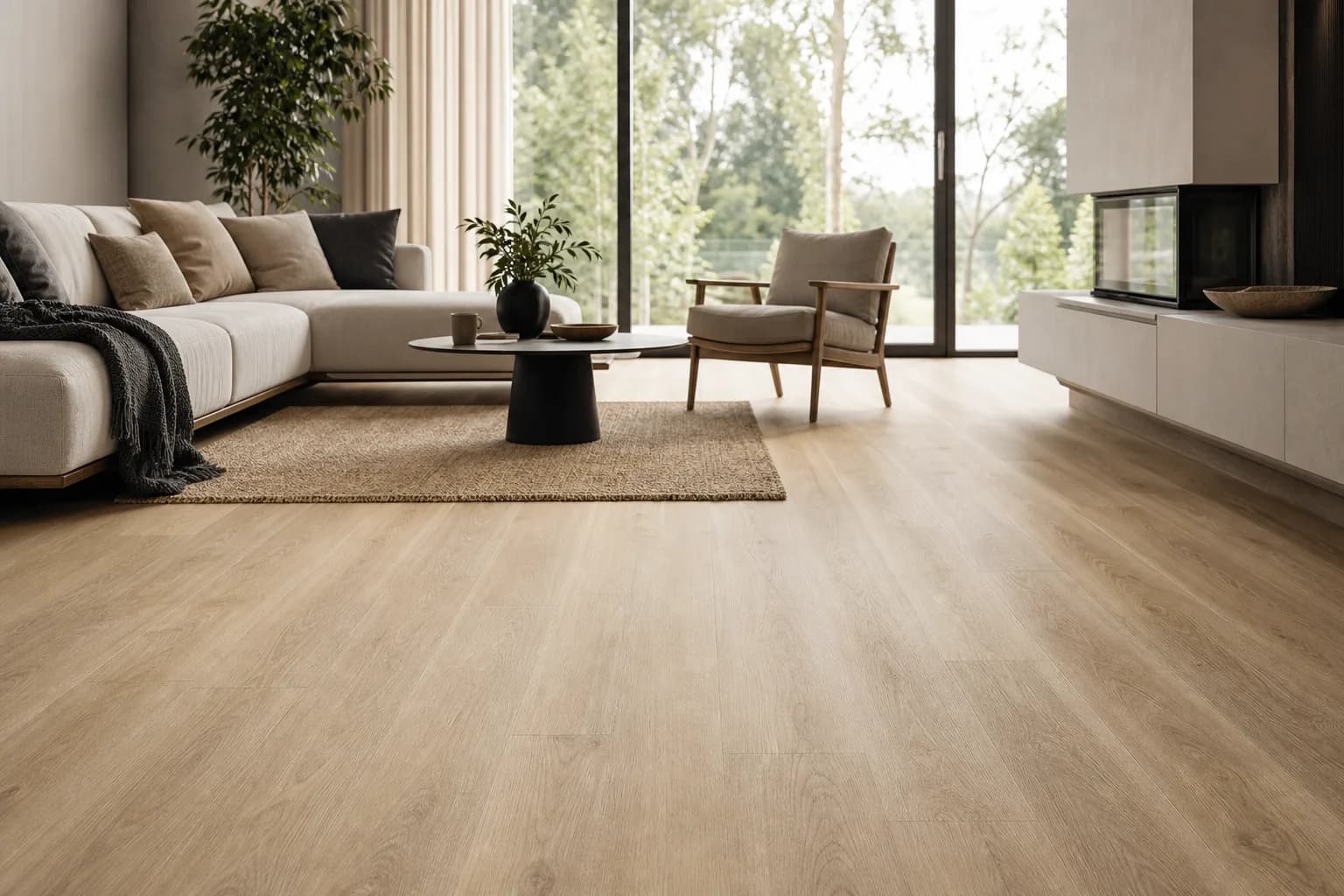
The short answer: vinyl flooring is a multi-layer floor covering with a hard-wearing surface film, 100 % waterproof, laid with a click or glue-down system. The best option for a family home is SPC vinyl with a 0,5 mm wear layer and wear class 33: click SPC from 25,95 €/m², glue-down LVT from 16,95 €/m². Suitable for kitchens, bathrooms, hallways and underfloor heating (up to ~27 °C).
Over the past five years, vinyl flooring has become the most popular alternative to parquet and laminate in European homes. The reasons are simple: 100 % waterproofness, easy DIY installation, an accessible price and remarkably realistic wood looks. In this guide we explain everything worth knowing before you buy.
What is vinyl flooring?
Vinyl flooring (or simply “vinyl”) is a multi-layer plank covering with a core made of polymers (PVC or stone composite) and a protective surface film printed with a wood, tile or concrete pattern. Unlike parquet, there is no layer of natural wood — it is a synthetic imitation, but a highly realistic one, with 3D-printed decor and a textured surface.
Three types dominate today’s vinyl flooring market: SPC (Stone Plastic Composite), LVT (Luxury Vinyl Tile) and WPC (Wood Plastic Composite). Each has a different core structure and different properties.
Pros and cons — is vinyl worth choosing?
Before you decide, it is worth weighing both sides honestly. Vinyl flooring is not a universal answer to everything — but on price-to-performance it is the most rational choice for many European homes today. Here is a fair balance.
Pros
- 100 % waterproof. A floor untroubled by a spilled cup or a more serious flood — which is why it suits kitchens, bathrooms and hallways without reservation.
- Accessible price. Glue-down LVT from 16,95 €/m², click SPC from 25,95 €/m². For comparison: engineered wood starts at 37,95 €/m².
- Simple installation. You can lay a click system yourself over a weekend — no adhesive, special tools or fitter required.
- Easy care. No oiling or lacquering — a vacuum and a damp cloth are all it takes.
- Suitable for underfloor heating. The SPC core stays stable up to a surface temperature of ~27 °C.
- Stands up to everyday wear. Wear class 33 and a 0,5 mm wear layer shrug off pet claws, children’s toys and chair castors.
- Quiet underfoot. An integrated IXPE underlay dampens footstep noise — a real benefit in apartment buildings.
Cons
- A synthetic material. However precise the imitation, it is not natural wood — you can feel the difference to the touch, especially next to oiled oak.
- Cannot be renewed. Once the surface wears out the whole floor is replaced, whereas parquet can be sanded and refreshed several times.
- Demanding about the subfloor. A click system tolerates unevenness of up to 3 mm per 2 m, glue-down even less; an uneven subfloor means extra levelling costs.
- Adds less value to a property. When selling a home, natural wood flooring is generally valued more highly than vinyl.
- Direct sunlight. In intensely lit, south-facing rooms cheaper floors can fade over time.
If you want a quick answer for your situation:
| Situation | Is vinyl a good choice? |
|---|---|
| Kitchen, bathroom, hallway | Yes — 100 % waterproof |
| Family with children and pets | Yes — wear class 33, easy care |
| Renovation where build height matters | Yes — glue-down LVT is only 2–3 mm thick |
| Tight budget | Yes — from 16,95 €/m² |
| Prestige home being prepared for sale | Worth weighing — parquet lifts property value more |
| You want a floor that can be renewed | No — vinyl cannot be sanded; choose engineered wood |
Verdict: choose vinyl when practicality comes first — wet areas, an active family with children or pets, a limited budget, or the wish to lay the floor yourself. If naturalness and the ability to renew the floor after 15–20 years matter most, investing in wood is the wiser move. You will find a detailed SPC value analysis in SPC flooring: pros and cons, and if you are weighing vinyl against laminate, a direct vinyl vs laminate comparison will settle it quickly.
SPC vs LVT vs WPC — the comparison
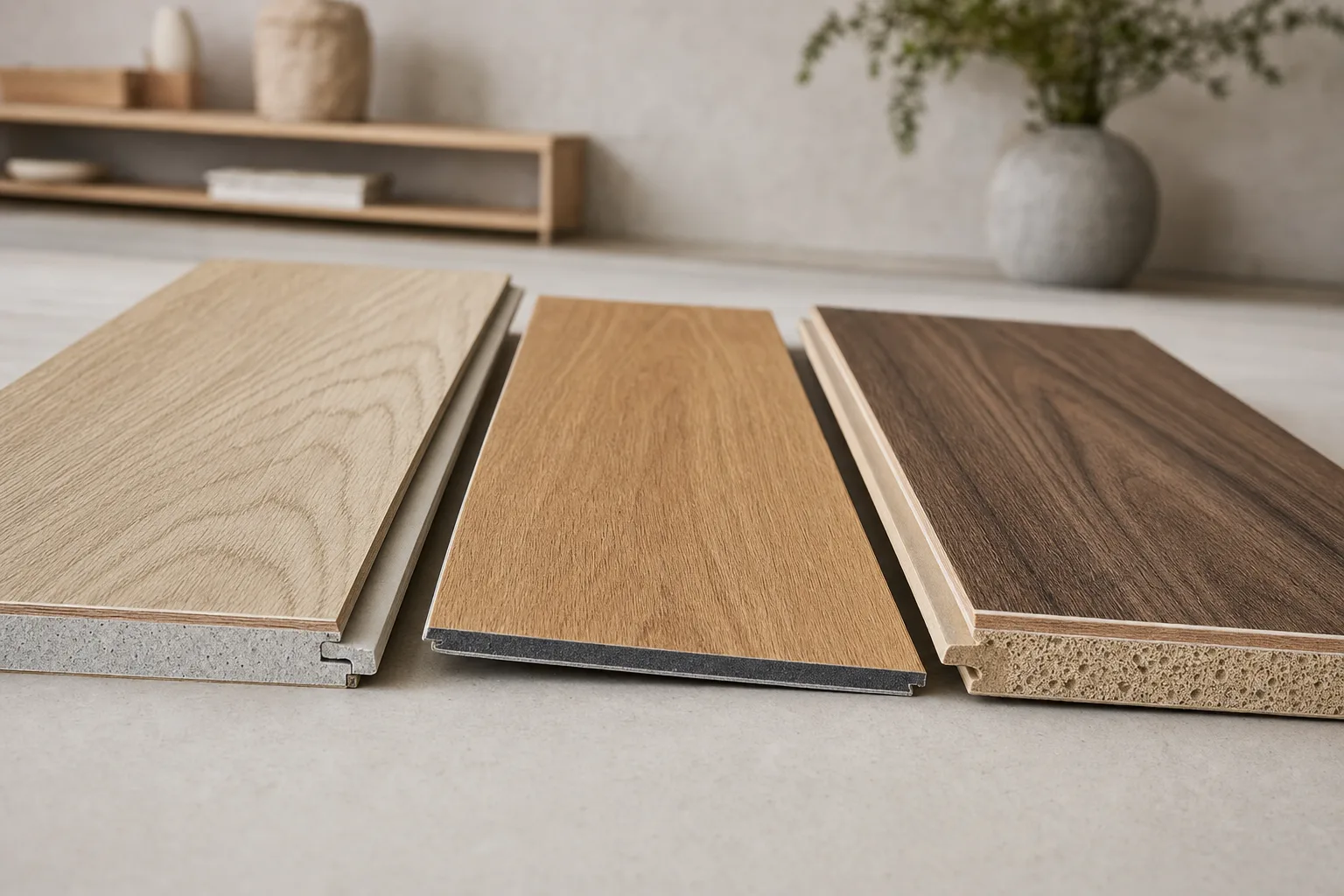
Let’s briefly run through the key differences between the three types:
| Property | SPC | LVT | WPC |
|---|---|---|---|
| Core | Stone composite (rigid) | Polymers (flexible) | Wood composite (intermediate) |
| Thickness | 4–6 mm | 2–3 mm | 6–8 mm |
| Waterproofness | 100 % | 100 % | 100 % |
| Stability (deformation) | High | Medium | High |
| Installation | Click system | Glue-down | Click system |
| Price in our range | from 25,95 €/m² | from 16,95 €/m² | not stocked (rare on the European market) |
| Best suited to | Universal — every room | Commercial spaces, low build height | Premium apartments |
Our range covers SPC and LVT vinyl: click SPC for most homes and glue-down LVT for renovations and commercial spaces. For a detailed look at how SPC and LVT differ, see SPC vs LVT vinyl.
Click system vs glue-down vinyl
Vinyl is installed in two main ways — DIY-friendly click or full glue-down. We stock both: the click SPC collection (36 designs) and glue-down LVT (11 designs). Each has its own strengths:
- Click system (SPC): planks lock together without adhesive and are laid over an acoustic underlay. Quick DIY installation (~1 m² in 5 minutes), easy to take up again (perfect for rental flats), no special tools needed. Build height 5–6 mm including the underlay.
- Glue-down LVT/SPC: bonded fully to the subfloor. Its advantages — a lower build height (2–3 mm, important under already-hung doors), quieter footfall and better heat transfer for underfloor heating. It calls for an experienced fitter and a level subfloor (max. 1 mm per 2 m unevenness).
Waterproofness — which rooms it suits
The headline advantage of vinyl flooring is 100 % waterproofness. Unlike laminate (which swells) or parquet (which deforms), vinyl stays stable even under prolonged standing water. That makes it right for:
- The kitchen — around the dishwasher, sink and fridge, where spills are inevitable
- The bathroom — as an alternative to ceramic tiles, warmer underfoot
- The hallway — moisture from shoes, snow in winter
- Basements and commercial spaces — where humidity control is limited
If you are still weighing several floor types for a specific room, it helps to compare vinyl, tiles and parquet side by side for kitchens and bathrooms before committing — vinyl wins on warmth and comfort underfoot, tiles on outright heat resistance.
Underfloor heating and vinyl
SPC vinyl pairs beautifully with underfloor heating, provided four conditions are met:
- A surface temperature no higher than ~27 °C (the exact limit is always given in the manufacturer’s specification)
- The heating has been running for at least 14 days before installation — letting the subfloor stabilise
- The vinyl is acclimatised for 48 hours in the room before laying
- Heating output is adjusted gradually — never in sudden steps of 5+ °C a day
The glue-down option gives 10–15 % better heat transfer than click — worth knowing if you are watching energy use. For more on engineered wood over underfloor heating (the rules are similar), see engineered wood for underfloor heating.
Acoustics and footstep noise
Vinyl on its own can sound hollow (click systems especially), so an acoustic underlay matters. Our SPC collection comes with an integrated IXPE underlay that cuts footstep noise by up to 19 dB — enough to meet apartment-building requirements. If you choose vinyl without an integrated underlay, an additional natural-rubber layer delivers up to 28 dB of damping. You will find it all in the accessories section.
Wear classes — which one for which use
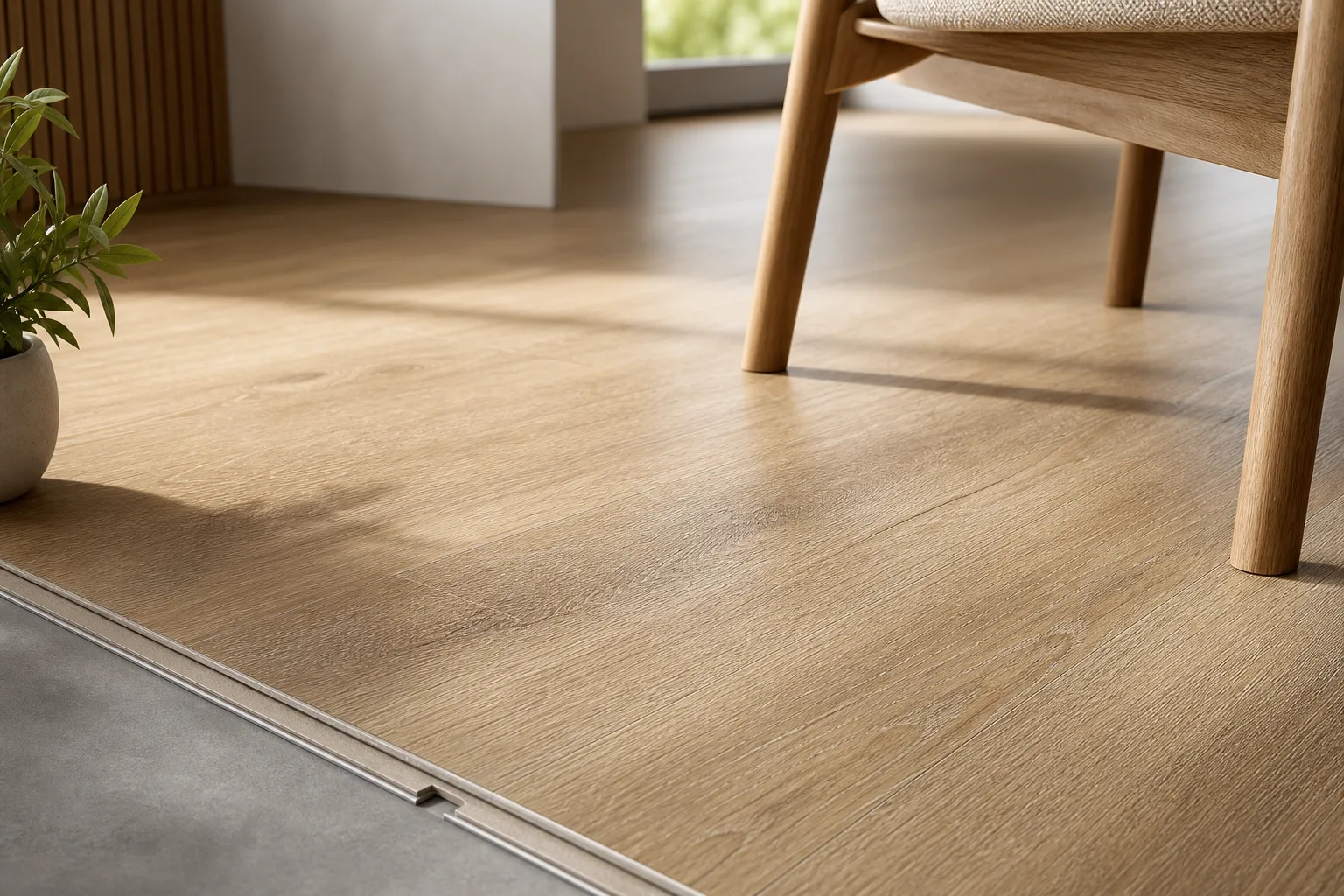
The wear class tells you how much traffic a floor can take. Classes run from 21 to 43 (the European standard):
- 21–23: residential rooms with light traffic only (bedrooms)
- 31–33: commercial spaces — offices, small shops. Class 33 is our SPC standard — the most durable solution for a home
- 41–43: heavy commercial traffic — restaurants, shopping centres
Our entire SPC vinyl collection carries wear class 33 and a 0,5 mm wear layer — right for families with children and pets.
Our range — 47 vinyl designs
Our vinyl collection counts 47 designs: 36 click SPC (from 25,95 €/m²) and 11 glue-down LVT (from 16,95 €/m²); prices reach up to 33,95 €/m². Popular picks:
- SPC Vigo — a classic tone, the economical choice
- SPC Valencia Fish — herringbone pattern, premium aesthetics (more in the herringbone collection)
- SPC Havana — a darker tone with character
- SPC Sao Paulo — a modern accent
You will find the full range in our vinyl collection, easy to sort by price.
Order up to 3 free samples — see the colours in your own light before you buy. Delivery across the EU in 5–7 working days — 199 € flat, free on orders from 2 500 €.
Installation — DIY or a fitter?
The SPC click system is the simplest plank flooring on the market to lay — first-timers included. You will need:
- A saw (hand or power)
- A ruler and pencil
- A rubber mallet
- Spacer blocks (an 8–10 mm gap at the walls)
An average 30 m² room takes 4–6 hours. Subfloor unevenness must not exceed 3 mm per 2 m — if that is a problem, use a self-levelling compound or bring in a professional fitter. If you do hand the work over, professional click-vinyl installation typically costs around 6–12 €/m² (indicative prices, varying by market).
Care — simple and quick
Vinyl is the easiest floor of all to look after — no special oils, no lacquer. Day to day:
- Vacuum or sweep (dry)
- Damp-mop with a neutral cleaner (nothing abrasive)
- Wipe up spills promptly (a soft cloth works best)
To avoid: steam mops (they can damage the surface), harsh cleaners (ammonia, chlorine) and abrasive pads. Minor scratches show less thanks to the textured surface.
Warranty and lifespan
Our vinyl floors carry a manufacturer’s warranty of up to 15 years, alongside a 14-day right of return. A realistic lifespan is 15–25 years, depending on traffic and the quality of care. After that the wear layer is spent and the whole floor needs replacing (unlike parquet, which can be sanded and renewed).
Conclusion
Vinyl flooring is the optimal solution when you need waterproofness, easy care, simple installation and an accessible price. SPC suits almost any room — kitchen, bathroom, hallway, bedroom or commercial space. If longevity and the natural warmth of wood matter more to you, look at engineered wood flooring instead. The most practical first step — order up to 3 free samples and judge the colour in your own home’s light.
FAQ
Is vinyl flooring waterproof?+
Yes — all quality vinyl floors (SPC, LVT, WPC) are 100 % waterproof. They suit bathrooms, kitchens, hallways and even basements. Unlike laminate, they will not swell even after prolonged standing water.
How much does vinyl flooring cost?+
Our vinyl collection runs from 16,95 € to 33,95 €/m²: glue-down LVT from 16,95 €/m², click SPC from 25,95 €/m². Professional installation of a click system typically costs around 6–12 €/m² (indicative prices). Delivery across the EU is a flat 199 €, free on orders from 2 500 €. The minimum flooring order is 20 m².
Can I install vinyl myself?+
Even first-timers can lay SPC click vinyl. All you need is a saw, a ruler, a rubber mallet and spacer blocks. An average 30 m² room takes 4–6 hours. We recommend leaving the glue-down version to a professional — it demands a very level subfloor.
How long does vinyl flooring last?+
A realistic lifespan is 15–25 years, depending on traffic. Our vinyl carries a manufacturer’s warranty of up to 15 years. After that the wear layer is spent and the whole floor needs replacing — vinyl cannot be sanded like parquet.
Is vinyl suitable for underfloor heating?+
Yes — SPC vinyl works with underfloor heating up to a surface temperature of ~27 °C (the exact limit is set in the manufacturer’s specification). The glue-down option transfers heat 10–15 % better than click. Important: run the heating for at least 14 days before installation and acclimatise the vinyl in the room for 48 hours.
Is vinyl flooring worth choosing?+
Worth it if waterproofness, easy care and an accessible price top your list: glue-down LVT from 16,95 €/m², click SPC from 25,95 €/m². Less suitable if you want natural wood that can be sanded and renewed — then look at engineered wood. Full analysis — SPC flooring: pros and cons