Tips · 14 min
Engineered oak flooring: everything you need to know
2026 m. rugpjūčio 12 d.
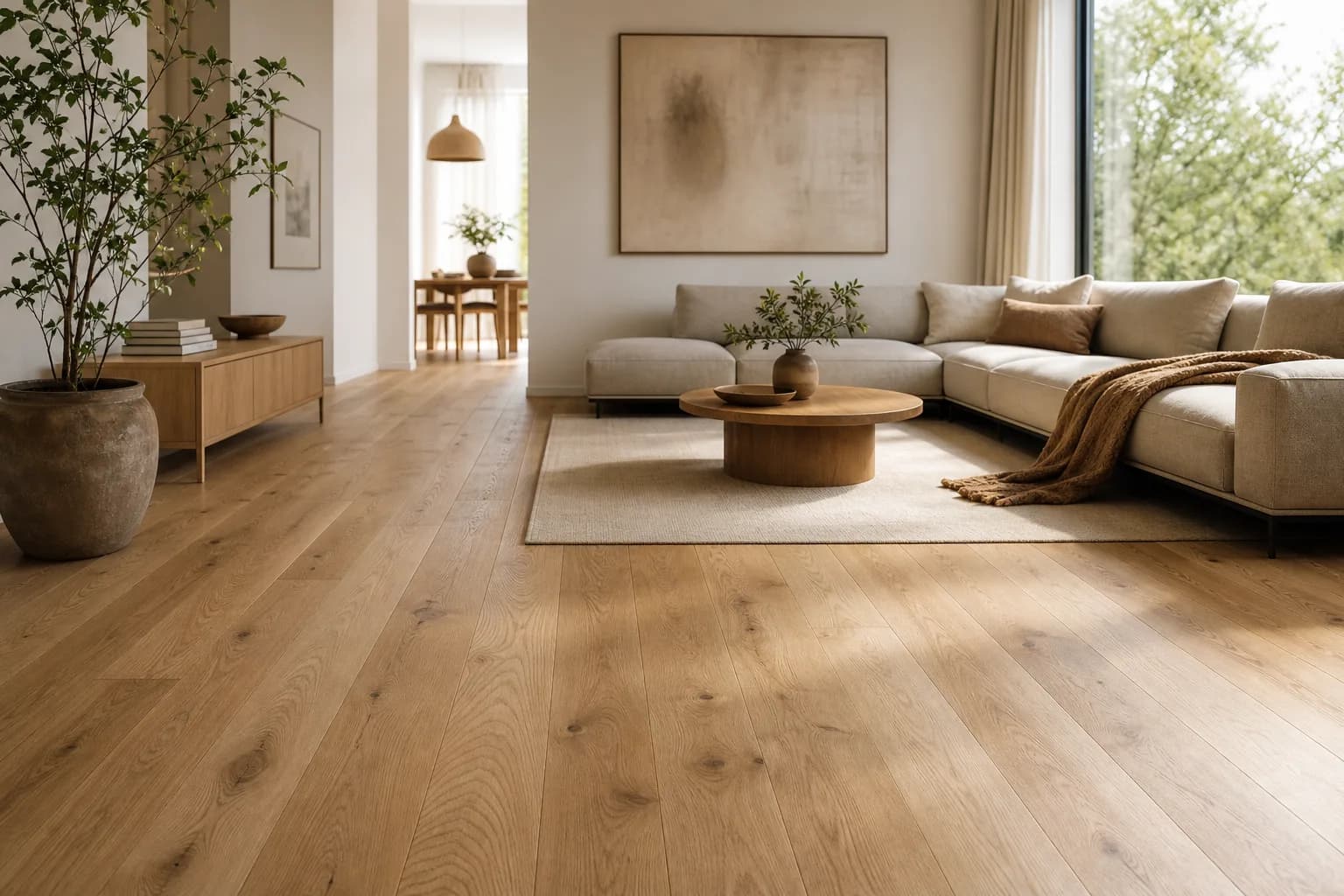
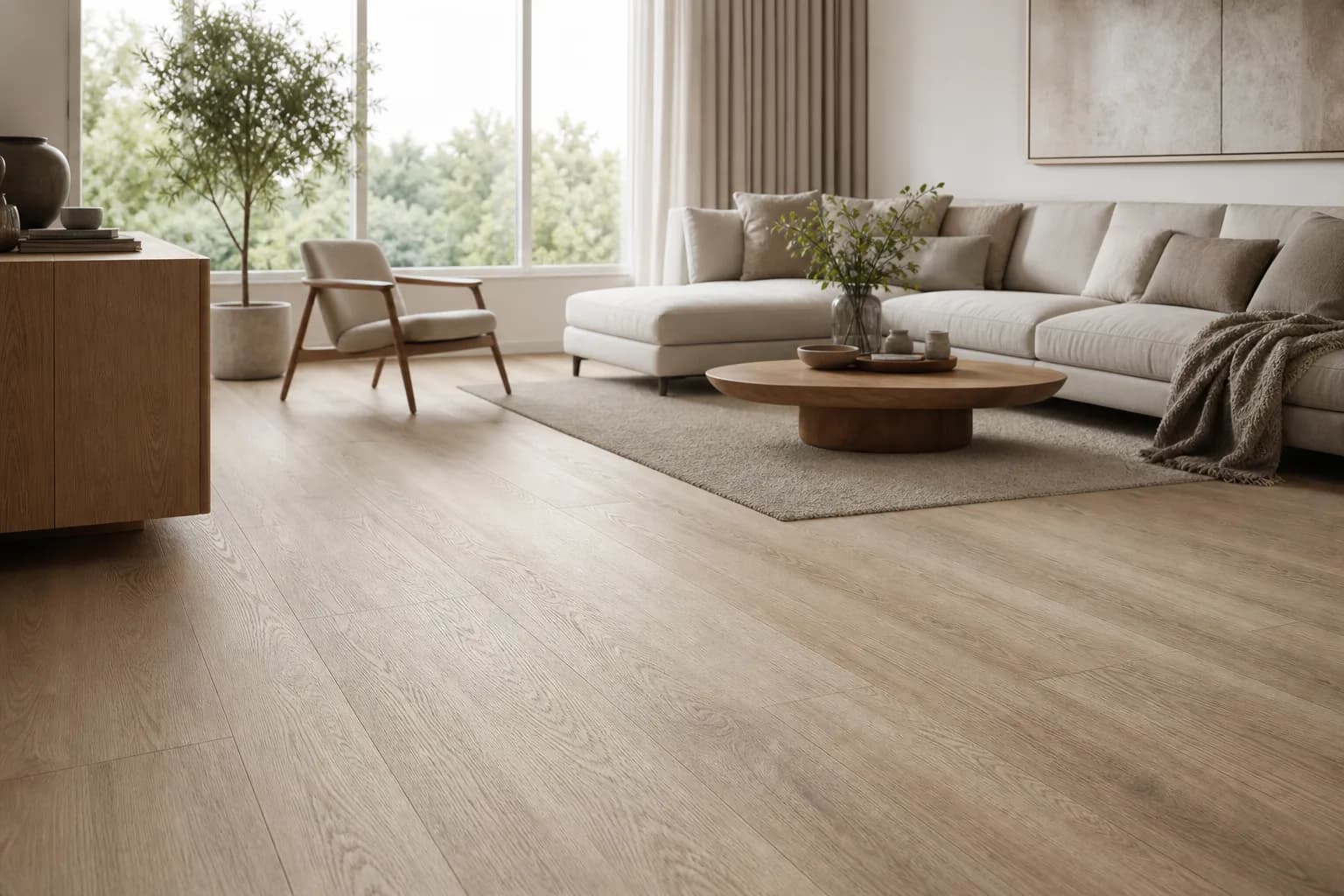
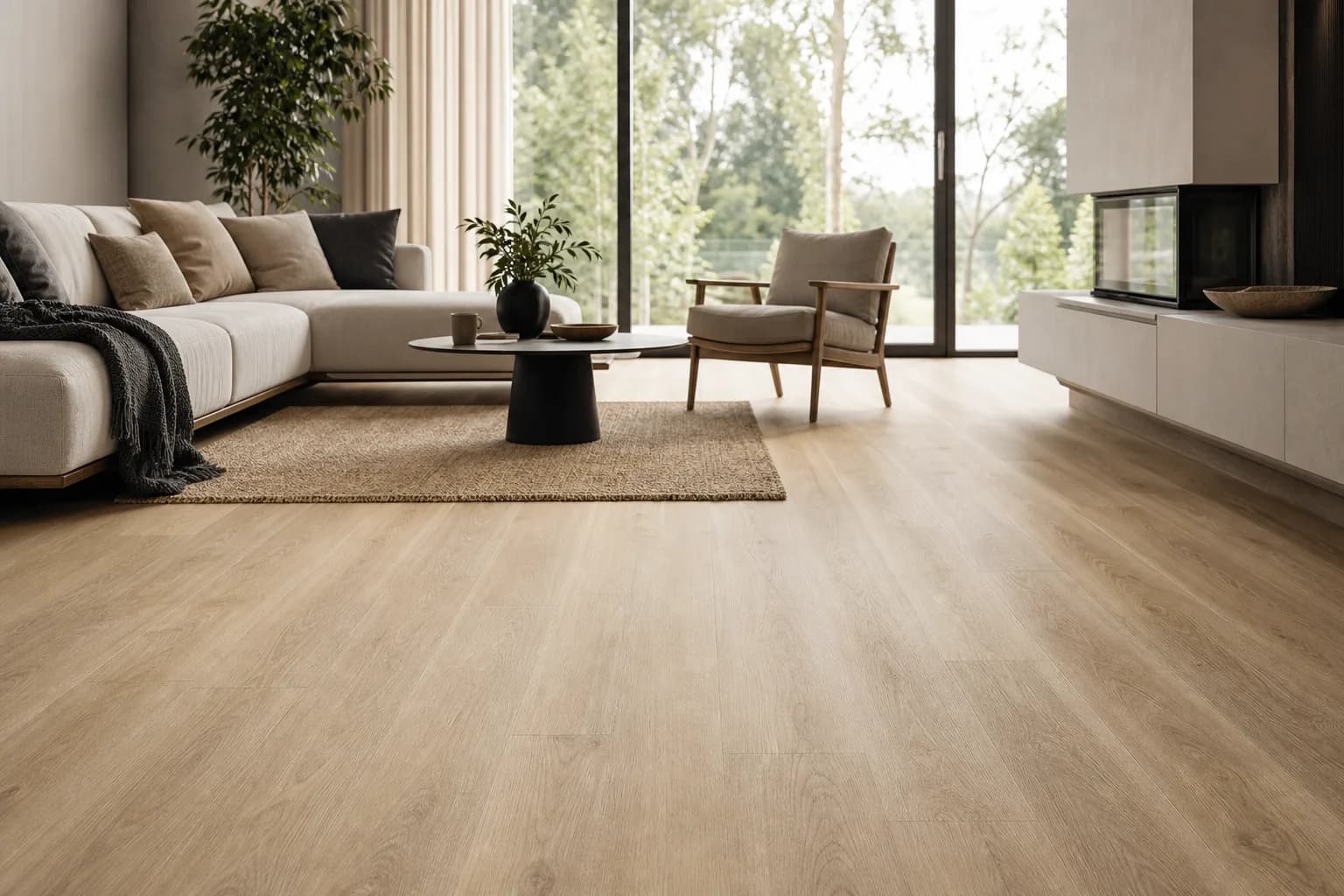
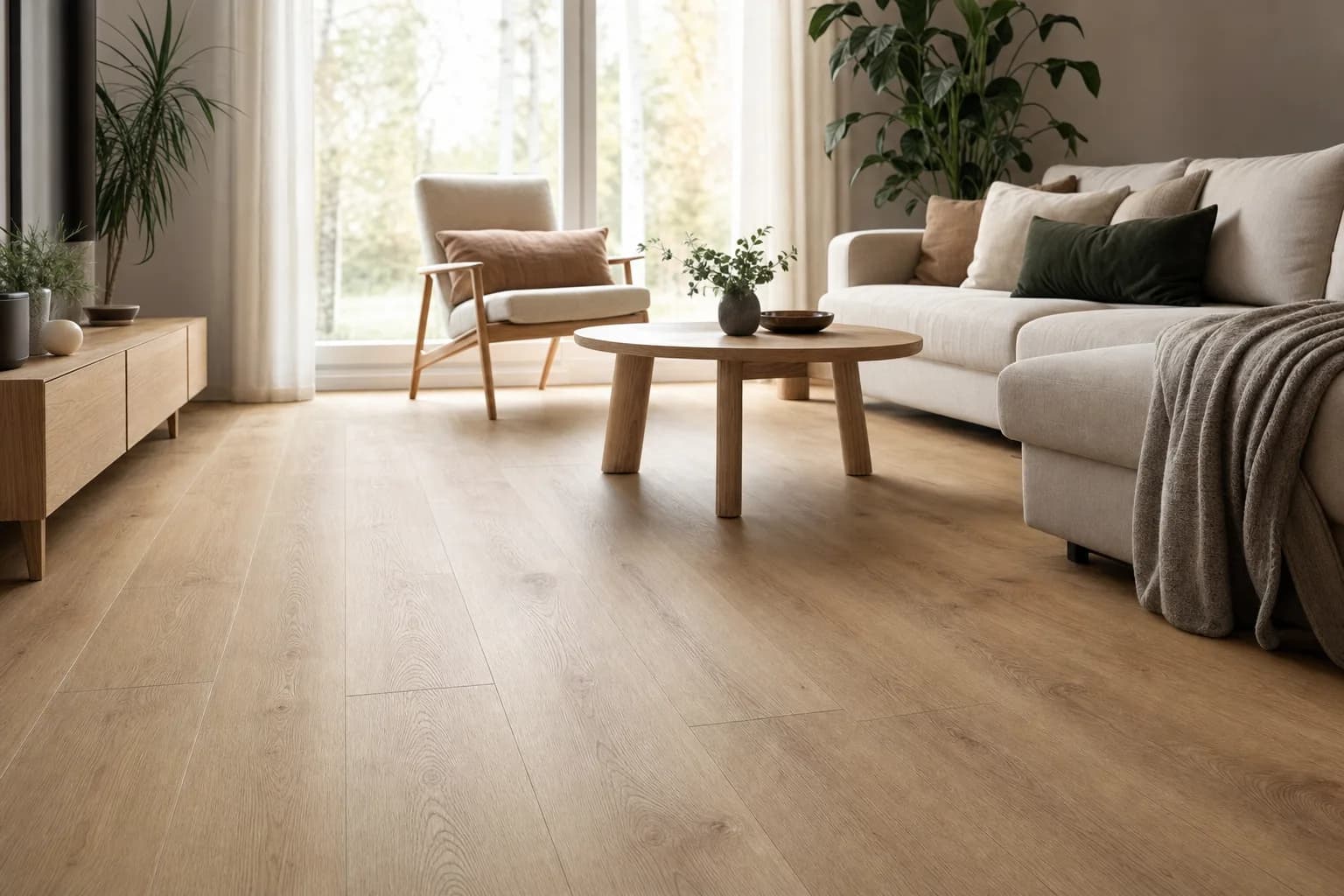
Wood flooring is here to stay. In its present form it has been known since the 16th century, when it began as a status symbol of the aristocracy. Happily, parquet is now firmly at home in every walk of life and accessible to every budget. Engineered oak flooring in particular shines with its versatility and sheer variety of looks and textures — it is the king of wood floors.
The oak tradition
Mythology and strength
Oak has played an important role in the mythology of many cultures since time immemorial. Its tough timber and its ability to live for more than 1000 years made the oak a symbol of strength, revered as a sacred tree of life. Today oak is prized in modern construction for the resilience and longevity of its timber. Oak is superbly suited to furniture and flooring — it is exceptionally hard and resistant to pests and rot.
Of the more than 600 oak species, most timber used for furniture and flooring comes from Europe and North America. Our engineered wood collection is built exclusively on European oak — timber from German, Austrian and Italian plantations, grown to strict FSC and PEFC standards.
The advantages of engineered oak flooring
Durability
The hard, dense cells of oak make the timber exceptionally stable and hard-wearing. The secret of its pest resistance lies in a high concentration of tannins — pure poison to termites, beetles and fungi. Oak flooring is particularly well suited to moisture-prone rooms such as bathrooms and kitchens: it copes with humidity and temperature swings better than other wood species.
In numbers, oak's advantage looks like this: European oak has a Brinell hardness of around 3,7 (an indicative figure — it depends on the timber's moisture content and where it grew). By comparison, spruce measures a mere 1,2–1,5 (again indicative), so an oak surface is several times more resistant to dents from heels, furniture legs or pets' claws.
Natural charm
Oak flooring has a natural beauty and individuality — every board has its own grain, colour nuances and texture. The interplay of warm, earthy tones with the structure and figure of the wood creates one-of-a-kind visual effects. The colour palette runs from creamy sand and light brown shades through to deeper browns and greys.
Thermal and acoustic insulation
Oak boards create a sense of cosiness that goes beyond looks. The dense timber has good insulating properties, helping to distribute and retain warmth efficiently — especially useful in rooms with underfloor heating. The same property also dampens sound and creates a pleasant acoustic atmosphere — ideal for bedrooms, living rooms and dining rooms.
Easy to care for
Compared with carpet, an oak floor's surface is smooth — dirt, dust and allergens have far less chance to build up, which makes cleaning simpler and quicker. Properly finished, the oak is protected against moisture and grime, so it lasts longer. The finish is simply refreshed every few years — more on that in our parquet care guide.
Kind to the environment
By choosing oak flooring, you are choosing an environmentally friendly solution. Wood is a naturally renewable resource from sustainable forestry. Unlike laminate or vinyl, oak flooring is biodegradable and easy to dispose of without burdening the environment.
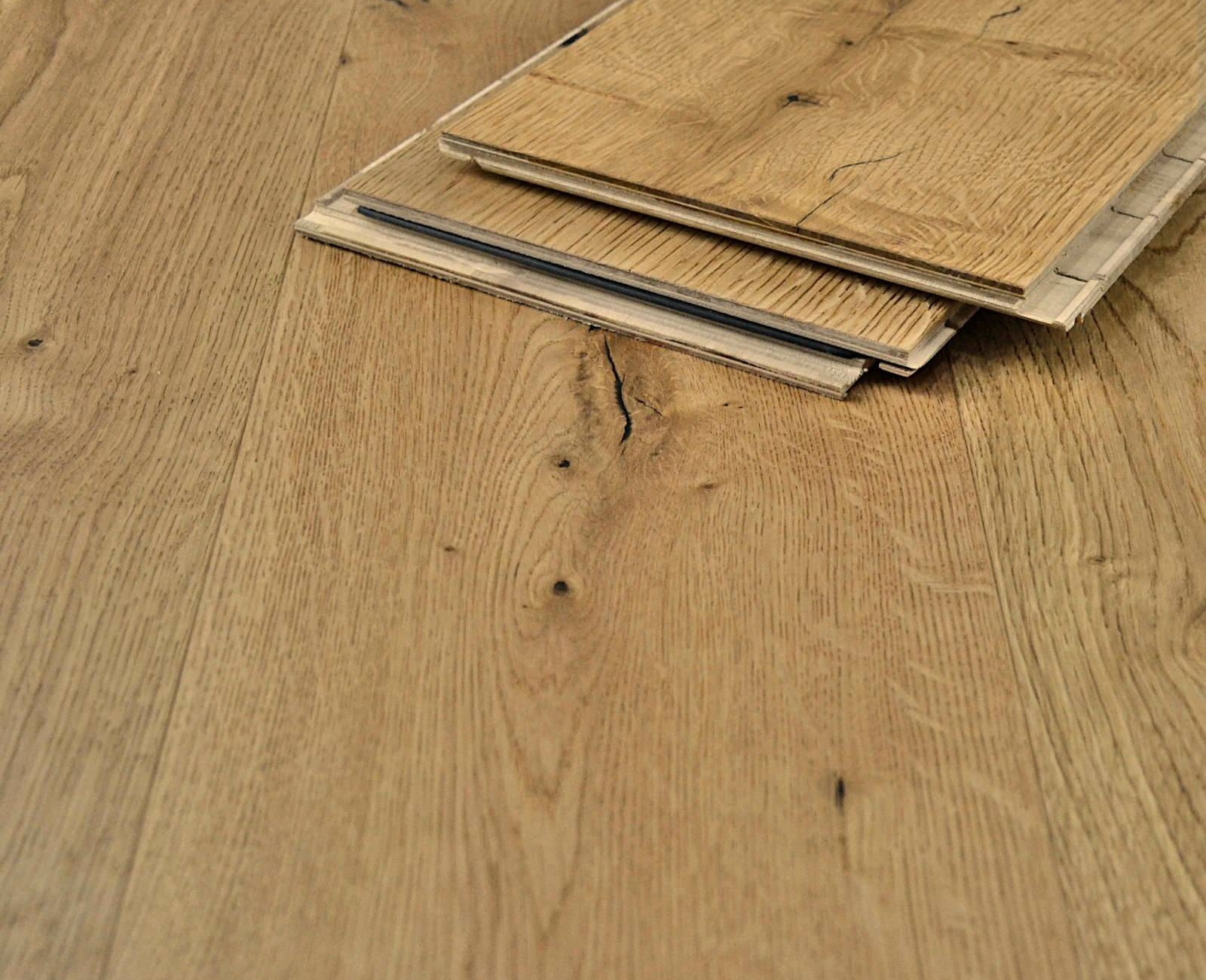
Types of oak flooring
Single-layer (solid)
Made from one continuous layer of solid oak. Pros: it can be sanded many times over and lasts up to 100 years. Cons: it is directly exposed to moisture and temperature — it can warp. In northern climates it is a rare choice.
Three-layer engineered (our collection)
Built from three layers: a 3–4 mm oak top layer, a cross-oriented core of less expensive timber, and a stabilising backing layer. Pros: more stable, more moisture-resistant, suitable for underfloor heating, and the surface is finished at the factory. Cons: the top layer is finite — it can be re-sanded once or twice. All 73 designs in our engineered wood collection are three-layer boards — the global premium standard. How exactly the layers are built up, and why the cross-ply construction is so stable, is explained in our parquet construction article.
How many times a floor can be renewed depends on the thickness of the wear layer — one sanding removes roughly 0,5–1 mm of wood:
| Construction | Wear layer | Number of sandings* | Service life* |
|---|---|---|---|
| Three-layer engineered board | 2,5 mm | 1 | 20–30 years |
| Three-layer engineered board | 3–4 mm | 1–2 | 25–40 years |
| Solid board | 6 mm and more above the tongue | 3–5 | 50–100 years |
* Indicative figures — they depend on sanding depth and how worn the floor is.
More on the differences between solid, three-layer and other parquet constructions in our guide to parquet types.
Choosing your oak floor
Colour
Oak's natural colour ranges from pale yellowish cream to a deeper golden brown. Different surface treatments — staining, smoking, oiling or lacquering — can produce virtually any tone, from the lightest to the darkest.
- Light tones (white-oiled): a Scandinavian feel that visually enlarges the room — for example Oak Milano and Oak Geneva; see the full light flooring category
- Natural: the classic warm shade — Oak Vienna, Oak Bergen, Oak Innsbruck; more in the natural shades category
- Dark (brown-oiled): a luxurious, intimate feel — Oak Oxford; see the full dark flooring category
How different shades change the mood of a room, and what to pair them with, is covered in depth in our oak flooring colours guide.
Protective finishes
Oiled finish
The wood is impregnated with oil, preserving the natural structure and creating a warm, 'living' feel. It needs re-oiling every year — but damage can be repaired locally (rather than replacing the whole board).
Lacquered finish
Creates a glossy or matt protective film — more resistant to wear and moisture, and simpler to look after. Local repairs are not possible — damage remains visible.
| Criterion | Oiled | Lacquered |
|---|---|---|
| Look and feel | Matt, natural 'living' wood surface | Glossy or matt protective film |
| Wear resistance | Good, but needs periodic renewal | Very good — the film guards against stains and moisture |
| Day-to-day care | Dedicated cleaners for oiled floors | Simple damp mopping |
| Renewal | Re-oiled annually or as needed | Only by re-sanding and re-lacquering the whole floor |
| Repairs | Damage can be fixed locally without replacing the board | No local repairs — damage stays visible |
| Who it suits | An authentic wood feel with spot-repairability | Heavily used rooms and easier maintenance |
You'll find a detailed comparison in our article on oiled vs lacquered flooring.
Surface textures
- Brushing: the softer wood is brushed out, creating a pronounced rustic texture that reveals the annual growth rings.
- Smoothing: sanded to a perfectly even surface.
- Handscraping: worked by hand — a bold, undulating 'raw timber' texture. A premium choice — Oak Alabama Deluxe.
Grading
Grading refers to the natural variation in the wood's colour and figure. There are three main grades:
- SELECT: homogeneous, with no bold accents — almost free of knots or colour differences
- NATUR: more colour variation, a livelier natural figure, occasional knots
- RUSTIKAL: plenty of knots, filled cracks and colour contrasts — vibrant and authentic
In international trade the same grades are often labelled with letter classes from AB to EF. The further down the alphabet, the more knots and character:
| Class | Common name | Knots and figure | Best for |
|---|---|---|---|
| AB | Select / Prime | Almost knot-free — isolated knots up to ~10 mm, even colour, calm figure | Minimalist, prestige interiors |
| ABC | Natur | Small sound knots (up to ~20–30 mm), livelier colour variation | A versatile choice for most homes |
| CD | Rustik | Prominent knots, filled cracks, visible colour contrasts | Country, loft and rustic-style spaces |
| EF | Rustikal / Country | Large knots with no strict size limits, filler, traces of sapwood | Maximum-character, authentic floors |
Knot sizes are indicative — every manufacturer defines the classes slightly differently.
The class changes only the look, not the quality of the timber. NATUR and RUSTIKAL grades dominate our range — see more in the engineered wood section.
The most popular oak laying patterns
Straight plank pattern (Schiffsboden)
Boards are laid parallel to one another, perpendicular to the wall. The pattern creates an optical illusion — rooms appear larger. Classic and universal. In generous spaces, wide boards look especially striking — XL-format designs in our collection start from 48,95 €/m².
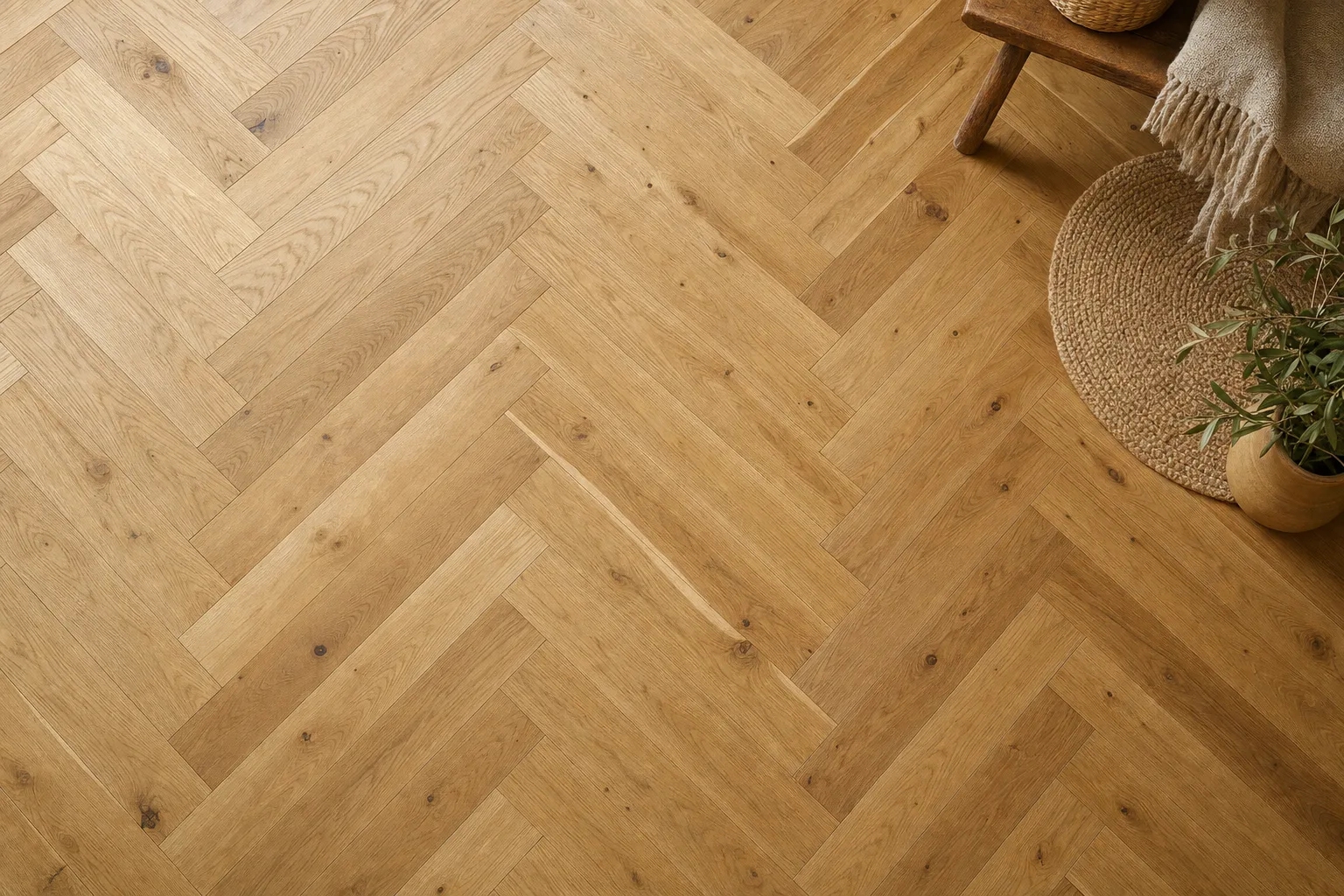
Herringbone (Fischgrät)
Boards are laid at 90° to one another, creating the signature herringbone pattern. Timeless and elegant — a natural fit for classic and traditional interiors. Herringbone boards in our collection start from 52,95 €/m² — more about the herringbone pattern in our dedicated guide.
Random (English) pattern
Boards of varying lengths create an irregular, natural look. Well suited to rustic-style interiors.
Squares
Boards are laid parallel and perpendicular to one another, forming a clear, structured grid pattern.
Style variants — which oak for which interior?
Classic style
High ceilings, antique furniture. Dark oak flooring (Oak Oxford) is the perfect match.
Modern minimalism
Clean lines, neutral walls. Light oak flooring (Oak Milano) creates a sense of space.
Rustic / country style
Brushed or smoked oak — for example Oak Innsbruck. A warm, welcoming aura.
Scandinavian
Light colours, natural materials. Pale oak — Oak Bergen or white-oiled designs. A connection with nature.
Oak vs other wood species
Beech
The second most popular species after oak. Similar in strength and density, but softer — more prone to scratching. Beech also reacts more sensitively to swings in humidity, which makes it less suitable for underfloor heating. A cheaper alternative.
Spruce
A soft species with a less pronounced figure. Less resistant to damage — its Brinell hardness is several times lower than oak's. Its one advantage: the price.
Walnut
A popular hardwood with a distinctive look and figure. Medium-to-high density, striking grain, dark colour. More expensive than oak. Deeply impressive, but more sensitive to scratching because of its lower hardness.
Can I install oak flooring myself?
Yes — with a little craftsmanship and some basic knowledge. For first-timers we recommend three-layer click flooring — the installation is simpler. More in our article on subfloor preparation.
If the floor is going over underfloor heating, we recommend full glue-down installation — it transfers heat better. Glue-down work is best left to a professional. If you entrust the job to installers, our parquet installation cost article gives indicative rates.
Oak flooring prices
The final price comes down to several factors:
- Engineered or solid: solid costs more (and is far less widely available)
- Floor area: the larger it is, the more material and labour
- Glue-down or floating: glue-down costs more because the work is more demanding
- Grading: SELECT (AB) is dearer than NATUR or RUSTIKAL — no 'imperfections'
- Finish: oiled and specially treated surfaces cost more
Our collection holds 73 engineered oak designs from 37,95 to 106,95 €/m² incl. VAT (from 36,95 €/m² during promotions). Herringbone boards start from 52,95 €/m², XL formats from 48,95 €/m². The most affordable options are easiest to find by browsing the collection sorted by price.
Add installation on top of the materials. As a rough guide: laying engineered boards costs around 7–20 €/m², herringbone 18–30 €/m², and sanding and re-oiling old wooden floors 15–25 €/m². A detailed materials budget is set out in our parquet price guide, and a whole-project estimate in our flooring installation cost article. Work out your exact quantity and total in the flooring calculator.
Worth knowing when you order: the minimum flooring order is 20 m², delivery within 5–7 working days costs a flat 199 €, and shipping is free on orders from 2 500 €. Our floors come with a warranty of up to 15 years.
FAQ: engineered oak flooring
Which engineered oak flooring is best?
Three-layer European oak with a 3–4 mm top layer, FSC or PEFC certified, with a Drop Down Click or tongue-and-groove installation system. That is the foundation of our 73-design collection.
How long does oak flooring last?
Three-layer engineered oak lasts 25–40 years with good care. It can be re-sanded once or twice and re-finished with oil or lacquer. Solid oak can serve for a century.
How much does oak flooring cost?
In the Terris Timber collection — from 37,95 to 106,95 €/m² incl. VAT (from 36,95 €/m² during promotions). As a rough guide, professional installation costs around 7–20 €/m², and herringbone 18–30 €/m². More detail in our parquet price and flooring installation cost articles.
What do the grading classes AB, CD and EF mean?
They classify the figure of the wood: AB — almost knot-free, with even colour; CD — prominent knots and filled cracks; EF — large knots with no strict limits, the most rustic look. The class changes only the appearance — not the quality or strength of the timber.
Is oak flooring suitable for kitchens?
Yes — especially lacquered boards fully glued to the subfloor. Protect the zones around the sink and dishwasher with mats. More in our articles on parquet in the kitchen and parquet in damp rooms.
Oiled or lacquered — which oak flooring should I choose?
Oiled is more authentic and warmer, but needs annual care. Lacquered is easier to maintain and more wear-resistant. More in our oiled vs lacquered comparison.
Is oak flooring suitable for underfloor heating?
Yes — oak is the best wood species for underfloor heating thanks to its good thermal conductivity and stability. We recommend glue-down installation, and the surface temperature should not exceed ~27 °C. Every design in our engineered wood range is suitable. For the full guide, see engineered wood for underfloor heating; a comparison of every floor covering over underfloor heating is in our dedicated article.
Ready to start?
Order up to 3 free oak flooring samples — see the true surface and colour of the wood in your own home's light. Or book a video consultation — together we'll review your project and pick the right oak from our 73-design collection.