Tips
How to Choose Flooring: The Complete 2026 Guide
2026 m. rugpjūčio 12 d.
Parquet, vinyl or tiles — which flooring should you choose? It is one of the questions we hear most often from buyers, and the answer is almost never “one floor for the whole home”. Flooring is one of the defining elements of an interior — it shapes the acoustics, how warm a room feels underfoot and the overall character of the space, so the decision deserves to be made on room use, budget and lifestyle rather than a single catalogue photo.
This guide gives you a decision path, two comparison tables (by material and by room), price levels and specific recommendations by intensity of use. We cover the three most popular floor types — three-layer engineered oak flooring, SPC vinyl flooring and porcelain stoneware tiles.
The decision path — 4 questions to ask before you buy
Ask yourself these questions in order — the answers usually point to one right floor:
- Is the room damp? (bathroom, kitchen, entrance hall) → SPC vinyl or porcelain tiles. Wood is out.
- Is there underfloor heating? → all three work, but wood only as three-layer engineered boards, glued down, with a surface temperature up to ~27 °C. More — engineered wood for underfloor heating.
- What is your budget per m²? → up to 35 € — vinyl (16,95–33,95 €/m²); 35–60 € — porcelain stoneware tiles (35,95–55,95 €/m²) or classic engineered oak boards (from 37,95 €/m²); from ~50 € — XL-format (from 48,95 €/m²) or herringbone (from 52,95 €/m²) oak, up to 106,95 €/m².
- Do property value and longevity matter? → wood (lasts 30–50 years and adds value). Vinyl and tiles are neutral.
Still unsure? Order up to 3 free samples (parquet and vinyl only) and judge the colour and texture in your own lighting before you commit.
Parquet, vinyl or tiles — a comparison across 5 criteria
Before we go room by room, here is the whole picture in one table. Flooring prices are from our range and include VAT; the fitting rates throughout this guide are indicative market rates.
| Criterion | Engineered wood | SPC vinyl | Porcelain stoneware tiles |
|---|---|---|---|
| Price (flooring, incl. VAT) | 37,95–106,95 €/m² (from 36,95 €/m² on promotion) | 16,95–33,95 €/m² | 35,95–55,95 €/m² |
| Water resistance | Sensitive — dry rooms only | 100 % waterproof | 100 % waterproof |
| Underfloor heating | Suitable — glued down, surface up to ~27 °C | Suitable — up to ~27 °C | Excellent — the best heat conductor |
| Everyday toughness | Scratches from grit; an oiled rustic surface masks marks | Very resistant to scratches and impacts | The hardest surface, unfazed by heat and grease |
| Repairs and renewal | Can be re-sanded and re-oiled (indicative ~15–25 €/m²) | Cannot be sanded — replace the damaged plank | Replace the damaged tile; the surface itself is not renewable |
If you are also weighing up laminate, SPC vinyl is usually the more practical alternative at a similar price point — we have gathered the arguments in SPC flooring: is it worth it?
Price levels in 2026 — what it really costs
Flooring is priced per m². Once you add delivery, fitting and accessories (adhesive, skirting, underlay), the total typically comes out 30–60 % above the price of the flooring itself. Below are the benchmarks from our range.
- Budget (16,95–33,95 €/m²): vinyl flooring — glue-down LVT from 16,95 €/m², click SPC from 25,95 €/m², e.g. SPC Vigo or the herringbone SPC Valencia Fish. Ideal for rental flats, children’s rooms and damp zones.
- Mid-range (35,95–60 €/m²): classic engineered oak boards (from 37,95 €/m²) or porcelain stoneware tiles, including marble-effect designs from 39,95 €/m², e.g. Oak Bergen or EndlessLove Empire. The sweet spot for a family home.
- Premium (48,95–106,95 €/m²): XL engineered oak boards (from 48,95 €/m²) and herringbone (from 52,95 €/m²), e.g. Oak Vienna. For premium homes, studies and statement interiors.
The easiest way to find the most affordable models is to sort each category by price: engineered wood, vinyl, tiles. The minimum flooring order is 20 m².
Delivery across the EU takes 5–7 working days at a flat 199 € — free on orders from 2 500 €. Indicative fitting rates: click vinyl ~6–12 €/m², engineered boards ~7–20 €/m² (herringbone ~18–30 €/m²), tiles ~25–35 €/m².
Room by room — choosing flooring for each space
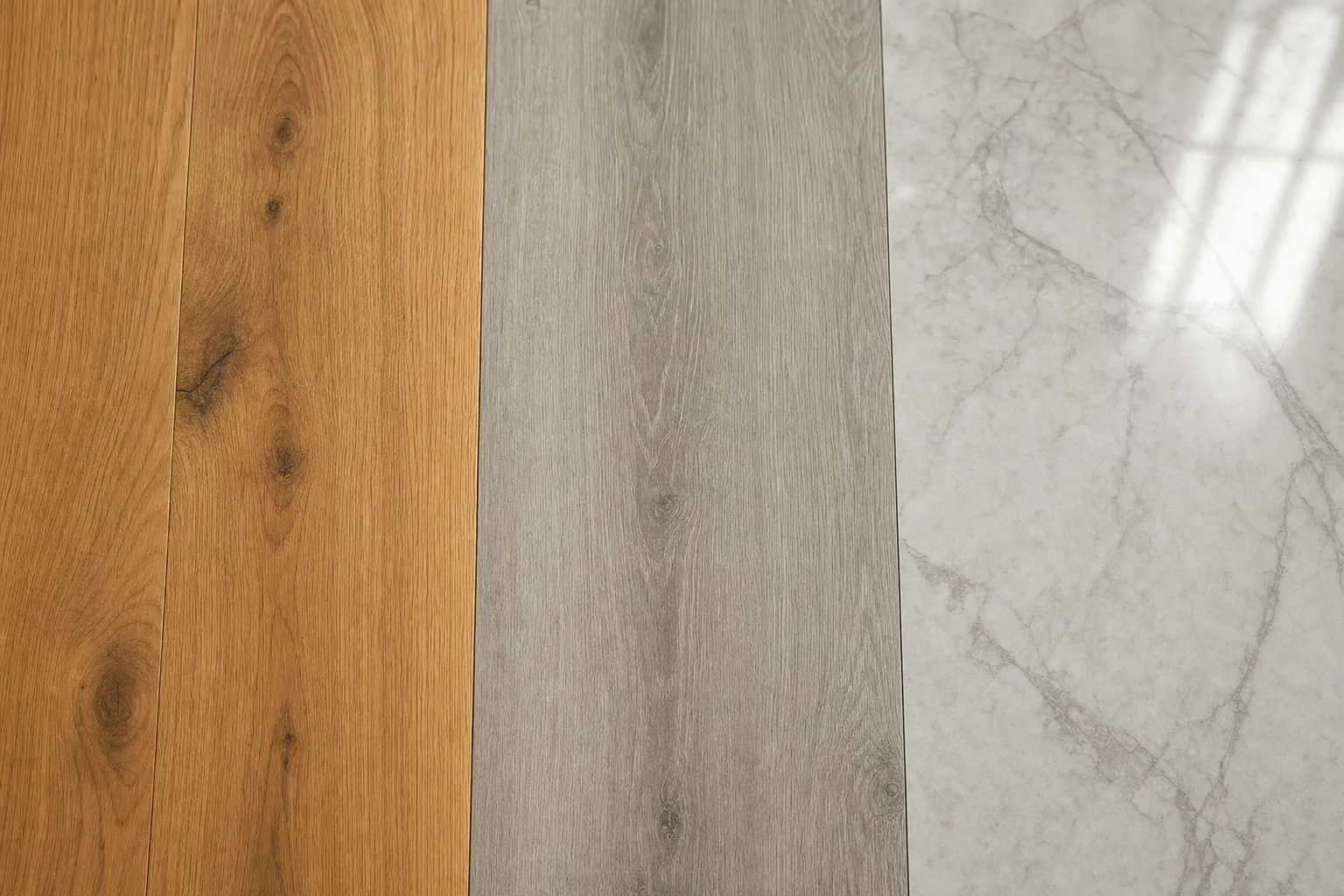
Choose by what each room is for, not one style for the whole home. Many families combine two floors — wood in the living spaces and vinyl in the damp ones. The table below is the quick map; each room is covered in detail underneath.
| Room | Engineered wood | SPC vinyl | Tiles |
|---|---|---|---|
| Living room | ★ best choice | Works well | Works (cosier with underfloor heating) |
| Bedroom | ★ best choice | Works well | Rarely chosen |
| Children’s room | Works (from ~age 5) | ★ for small children | Works |
| Home office | ★ best choice | Works well | Works |
| Kitchen | Open-plan zones only | ★ warmer and quieter | ★ the toughest |
| Entrance hall | Risky (grit from shoes) | ★ most practical | Very good |
| Bathroom | Not suitable | Works | ★ the standard |
Kitchen and dining room
Kitchens mean moisture sources (dishwasher, sink), grease splashes and furniture on the move. SPC vinyl or porcelain tiles are the best solutions. Vinyl’s advantage is a warmer feel underfoot and quieter footsteps; tiles are completely unfazed by heat and grease. Wood in a kitchen only makes sense in an open-plan layout where the kitchen zone is small.
Bathroom
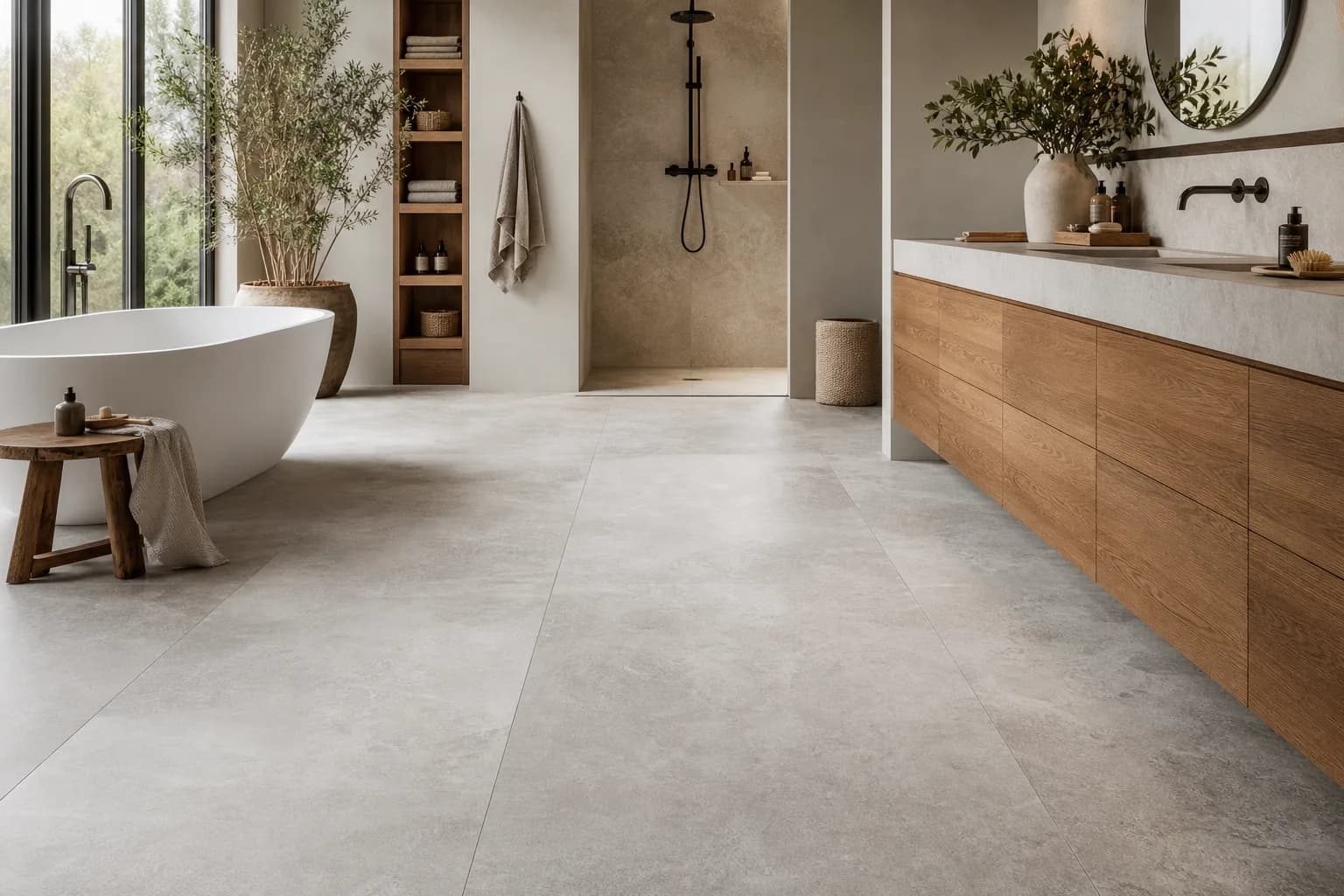
The dampest room in the home — wood simply is not an option here. The standard is porcelain stoneware tiles (slip class R10 or higher). SPC vinyl also works and feels warmer underfoot.
Bedroom
The main criteria are comfort underfoot and acoustics. Three-layer engineered oak is the traditional choice — warmer, quieter and unmistakably homely. Oiled boards reveal the natural texture of the wood; lacquered boards are easier to clean. For busy families with small children, the most practical compromise is an oiled rustic surface that masks small scratches.
Living room
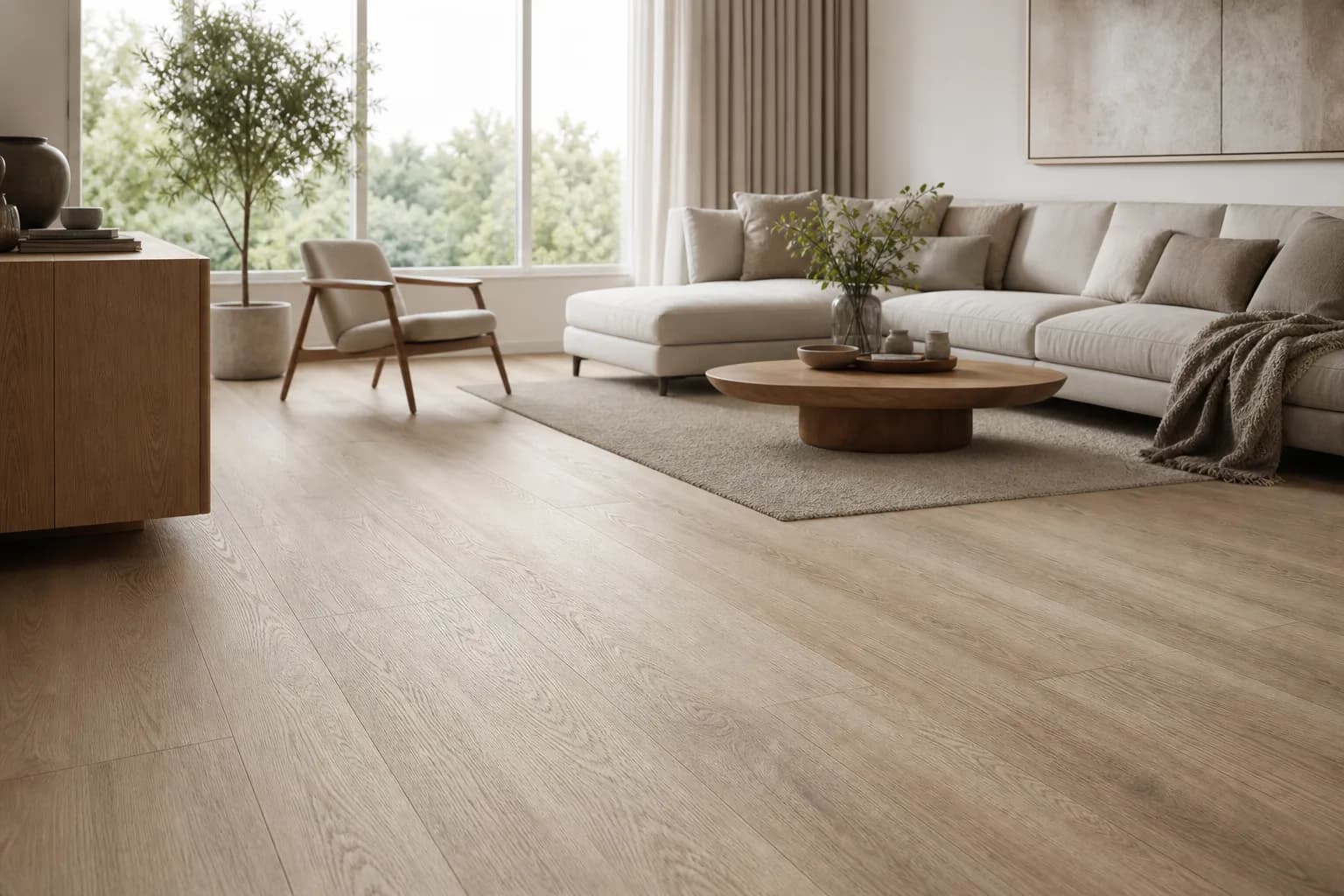
The heart of the home — both looks and acoustics matter here. Engineered wood is the dominant choice in premium interiors. Wide XL boards (up to 240 × 2200 mm) mean fewer joints and visually enlarge the space. Herringbone and chevron are the classic statement. More on oak floor types and grades — engineered oak flooring.
Entrance hall and corridor
Heavy traffic and moisture from shoes — SPC vinyl or tiles are the most dependable. Wood scratches faster here because of grit carried in on shoes. If you do want wood, choose an oiled rustic board (CD/EF grade), where small scratches simply will not show.
Study / home office
A visual anchor for a room where you host guests or take video calls — wood creates a professional feel, and the acoustics matter too (no hollow sound). Darker tones such as Oak Oxford add gravitas.
Children’s room
It depends on age. Under 5 — vinyl (shrugs off toy impacts and felt-tip pens, and is easy to clean). From about 5 — wood works once the scratching phase has passed. The same logic applies to homes with pets — what matters most is a resilient surface that is easy to clean.
Underfloor heating — which floor conducts heat best
All three floor types work over underfloor heating, but with different requirements and different efficiency.
- Tiles — the best thermal conductivity: they warm up fastest and transfer heat most efficiently.
- SPC vinyl — good heat transfer, especially glued down; surface temperature up to ~27 °C.
- Engineered wood — three-layer boards only (never solid wood), full glue-down recommended, maximum surface temperature ~27 °C. More — engineered wood for underfloor heating.
Lifestyle and pets
Families with small children or pets have different needs from a couple without them. The key factors are scratch resistance, moisture resistance and easy cleaning.
- Families with children and pets: SPC vinyl (resilience) or oiled rustic engineered oak (small scratches disappear into the grain).
- Adults-only flat, light traffic: any option, including lacquered boards in a minimalist AB grade.
- Commercial spaces: SPC vinyl (wear class 33) or tiles. Wood — only for premium offices.
For more on oak’s hardness and how it stands up to daily life — engineered oak flooring.
Mistakes worth avoiding
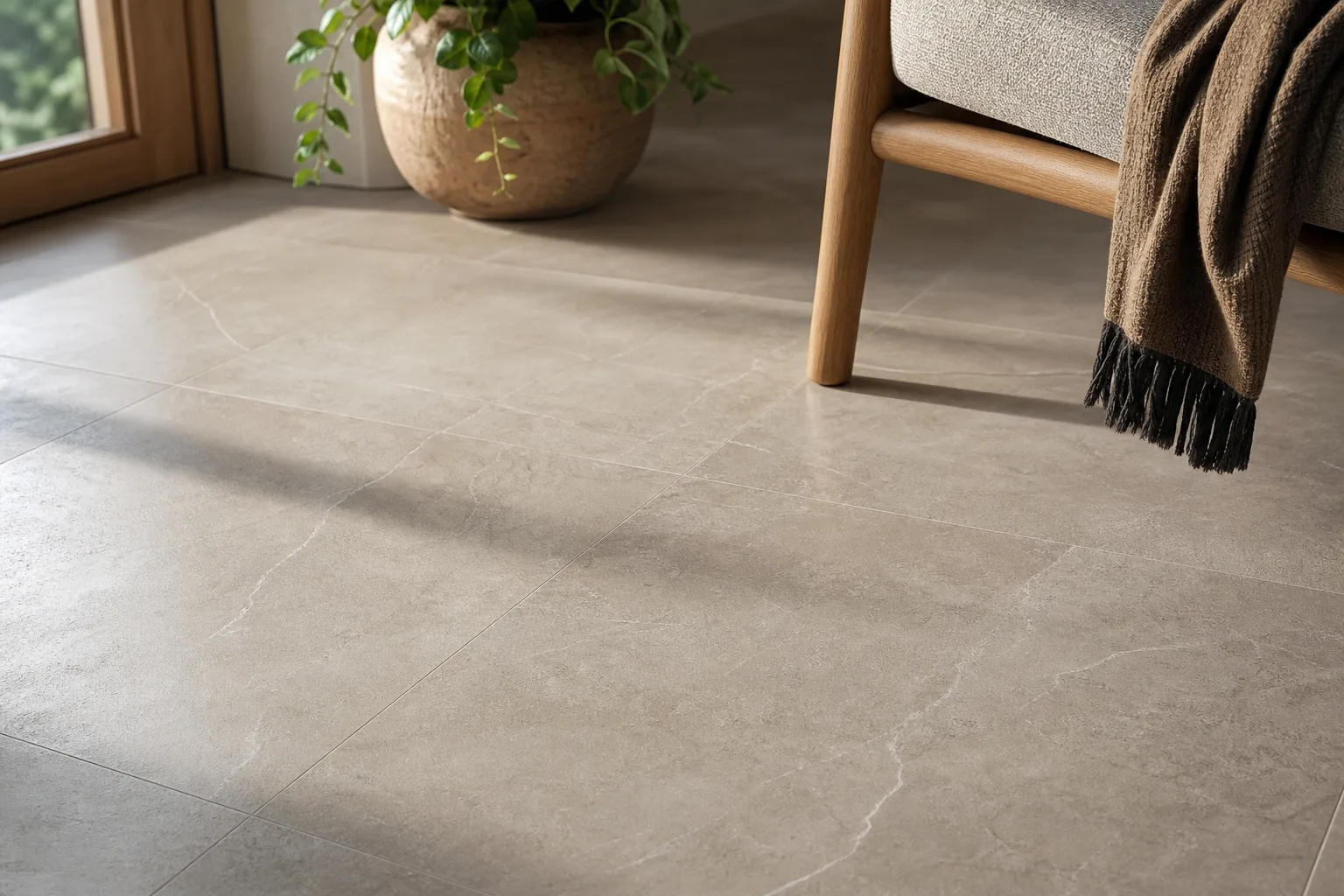
After more than a decade in the flooring trade, we see buyers repeating the same mistakes:
- Ordering wood for a bathroom — always a mistake. Bathrooms take tiles or SPC vinyl only.
- Forgetting the wastage allowance — ordering the exact area with no 7–15 % reserve. Boards run out mid-installation, and by then the batches no longer match. Work out your allowance in the calculator.
- Choosing too thin a wear layer — a 2 mm top layer will not survive sanding. Look for 3–4 mm.
- Buying from a photo alone — colours on screen and in real life differ. Order up to 3 free samples (parquet and vinyl only) before you buy.
- Overlooking underfloor heating — solid wood and underfloor heating do not mix. Three-layer engineered boards only.
Installation — DIY or a fitter
All our engineered boards and click vinyl use the Click 5G system, which allows self-installation. Click vinyl is the easiest place to start; engineered wood is an intermediate-level job (for herringbone or XL formats, it is better to hire a fitter). Tiles always call for an experienced professional. For a detailed walkthrough, see how to install engineered wood flooring.
Style and shade — matching your interior
Colour and texture are often chosen last, yet they make the biggest visual impact. The core principles:
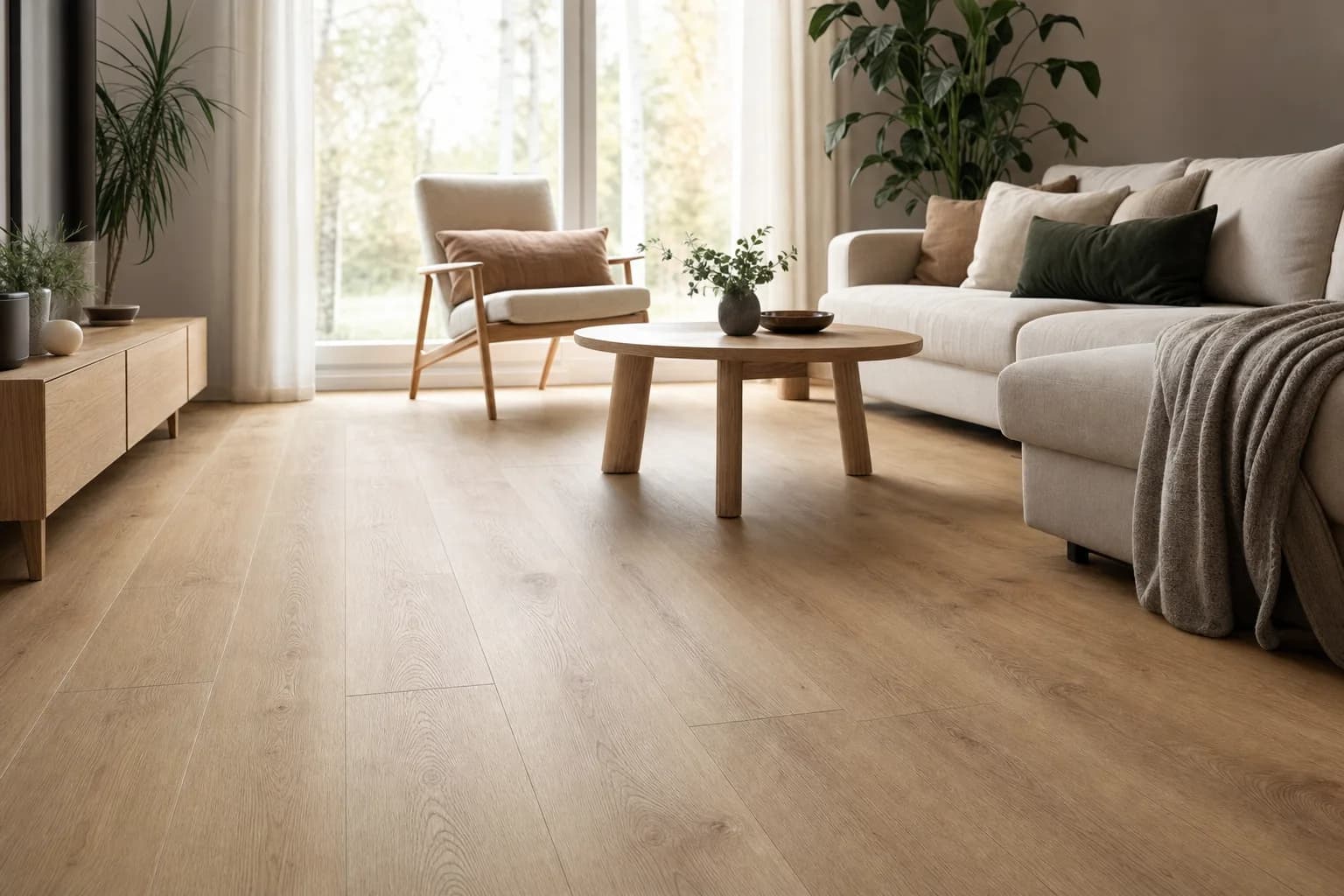
- Light boards (white-oiled, natural tone) — visually enlarge a room; perfect for Scandinavian schemes.
- Dark boards (smoked, deep-oiled) — create an intimate, luxurious feel and pair beautifully with light furniture.
- Marble-effect tiles — a premium look that reads more expensive than it is.
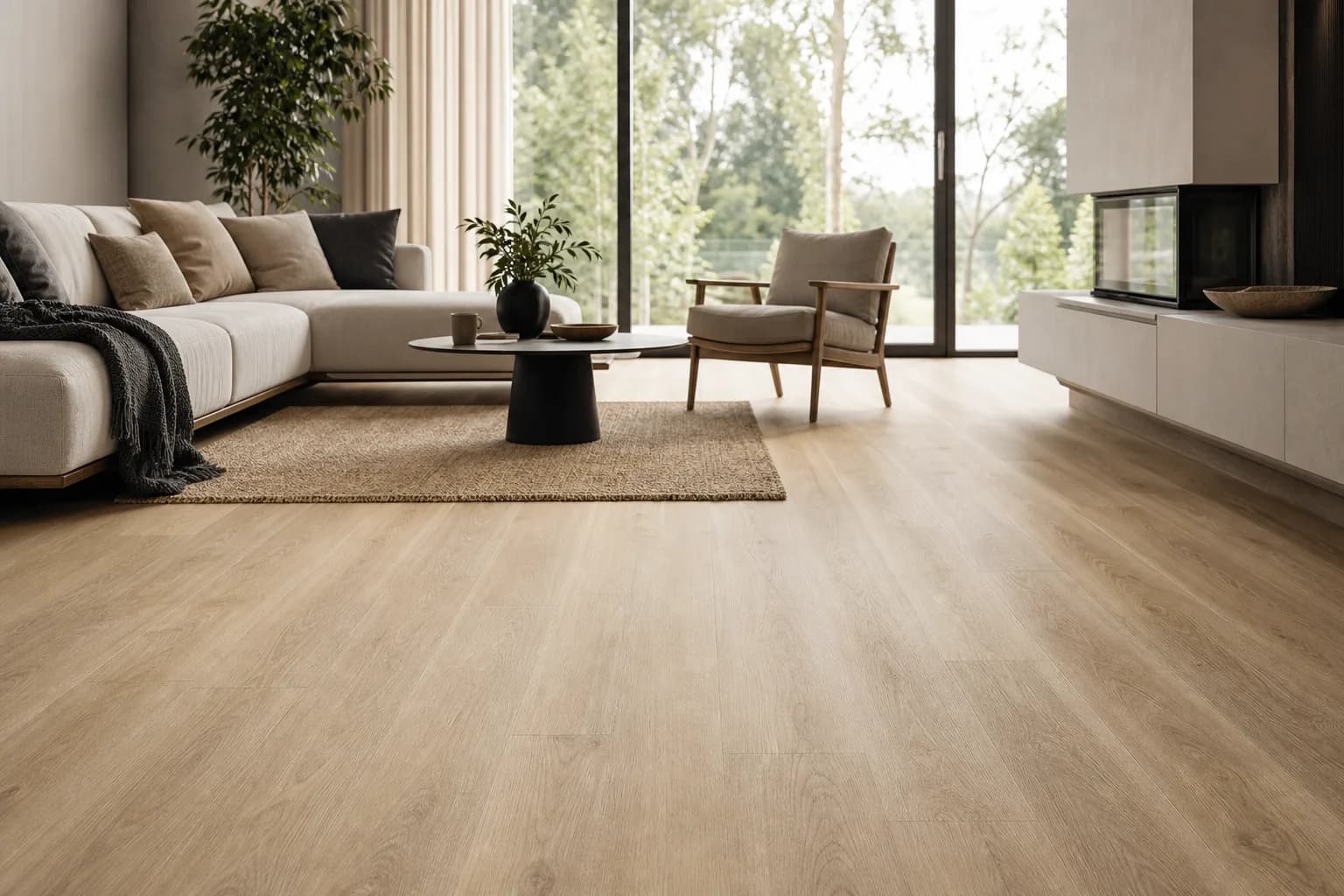
- Wood-look vinyl — natural aesthetics when the budget rules out real wood.
When choosing between oiled and lacquered finishes, think about upkeep: an oiled surface can be refreshed locally, a lacquered one only by re-sanding the whole floor. For oak grades and colour treatments, see engineered oak flooring; if you are set on herringbone, plan a larger 12–15 % wastage allowance.
Conclusion — step by step
- Assess each room separately (dry / damp / heated).
- Set your budget per m² — including wastage, fitting and accessories.
- Shortlist two or three floors from the engineered wood, vinyl and tile ranges.
- Order up to 3 free samples (parquet and vinyl only) — see the colours in your own light.
- Book a video consultation — we will go through your plan together.
- Order and install — yourself, or with an experienced fitter.
Questions along the way? Get in touch — we reply within one working day.
FAQ
Which floors suit underfloor heating?+
All three work — three-layer engineered wood (glued down, surface up to ~27 °C), SPC vinyl (up to ~27 °C) and porcelain tiles, which conduct heat best of all. Wood feels the most comfortable underfoot. More on the wood option — engineered wood for underfloor heating.
What is the best flooring for a kitchen?+
SPC vinyl or porcelain stoneware tiles — both 100 % waterproof and easy to clean. Vinyl is warmer underfoot; tiles are tougher against hot pans.
How much does engineered wood flooring cost, fitted?+
Our engineered boards cost 37,95–106,95 €/m² (from 36,95 €/m² on promotion). Fitting is an indicative ~7–20 €/m², or ~18–30 €/m² for herringbone. An average 30 m² room in engineered wood, with materials and labour, starts from roughly ~1 600 €.
Can I install the flooring myself?+
Click SPC vinyl — yes, the easiest option for beginners. Click 5G engineered wood — yes, an intermediate-level job (for XL formats and herringbone, it is better to hire a fitter). Tiles always need an experienced professional.
How much wastage should I allow for when ordering?+
For straight installation — 7–10 %. Diagonal — 10–13 %. Herringbone — 12–15 %. Complex rooms with many corners — up to 15 %. You can work it out precisely in our calculator.
What flooring should I choose on a small budget?+
Vinyl: glue-down LVT from 16,95 €/m², click SPC from 25,95 €/m². Vinyl is 100 % waterproof, works in every room and can be installed yourself. If you are comparing it with laminate — see SPC flooring: is it worth it?
Should the whole home have the same floor?+
Not necessarily — the most common solution is two floors: wood in the living spaces, vinyl or tiles in the damp ones. If you want a single floor throughout, SPC vinyl is the most universal choice, since it also suits damp zones.